Story Behind Traditional Filipino Street Foods Key Takeaways
The beauty of affordable Filipino food is that it doesn’t require a big budget to taste the best of the country.
- Filipino street food culture was born in bustling markets and town plazas, where vendors turned simple, affordable ingredients into instant snacks for busy workers and students.
- From the crunchy orange shell of kwek kwek to the caramelized sweetness of banana cue , these snacks showcase the Filipino talent for balancing sweet, savory, sour, and smoky flavors.
- Traditional Filipino snacks are more than quick meals – they are edible passports to local life, heritage, and the warm, welcoming spirit of the Philippines.
How the Story Behind Traditional Filipino Street Foods Began
Filipino street food didn’t start in a fancy restaurant. It began in the narrow alleys of Quiapo, the busy sidewalks of Divisoria, and the Philippine street food culture hubs of every town. After World War II, as communities rebuilt, local food vendors found creative ways to feed hungry neighbors using the most affordable ingredients available. They set up makeshift carts near schools, transport terminals, and churches. A few sticks of fish balls Philippines style, fried right there on a wheeled cart, became the original fast food. The vendor didn’t just sell food – they created a gathering spot. That small, shared moment over a paper plate of skewers is the heart of the story behind traditional Filipino street foods. For a related guide, see What is Silog? Understanding the Heart of the Kilig Bali Breakfast.
What Makes Philippine Street Food Culture So Unique?
Philippine food culture embraces contrast. You’ll find kwek kwek, hard-boiled quail eggs coated in orange-dyed batter and fried until crisp, served with a spicy vinegar dip. Right next to it, a vendor might be grilling Filipino barbecue – pork skewers marinated in a sweet garlic-soy blend, basted with banana ketchup. The same cart often offers turon snack, which is ripe saba banana wrapped in spring roll skin, fried, and coated in caramel. This variety on a single cart reflects a culture that values inclusivity. Every budget finds a match, and every craving – whether for savory or sweet – is satisfied. The street food traditions of the Philippines are defined by this generous, anything-goes philosophy.
The Role of Local Food Vendors in Building Community
Local food vendors are the unsung heroes of Filipino food heritage. They know their regulars by name – the student who always orders five sticks of fish balls Philippines style with extra sweet sauce, the tricycle driver who needs two banana cue to get through the afternoon shift. These vendors become anchors of daily life. They keep recipes passed down from aunts and grandmothers, adapting only slightly to what’s available in the market. Without them, the authentic Filipino snacks would lose their soul. They preserve the story behind traditional Filipino street foods one batch of fried goodies at a time.
Popular Filipino Street Foods You Must Try
The beauty of affordable Filipino food is that it doesn’t require a big budget to taste the best of the country. Here are fifteen iconic snacks that define the story behind traditional Filipino street foods.
Kwek Kwek
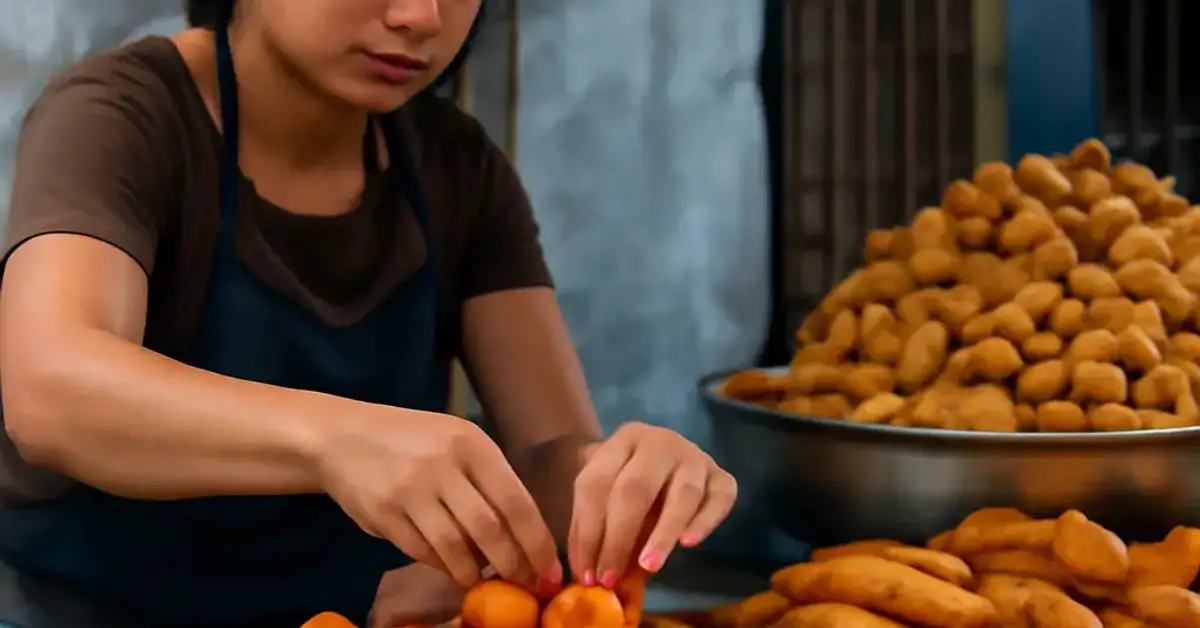
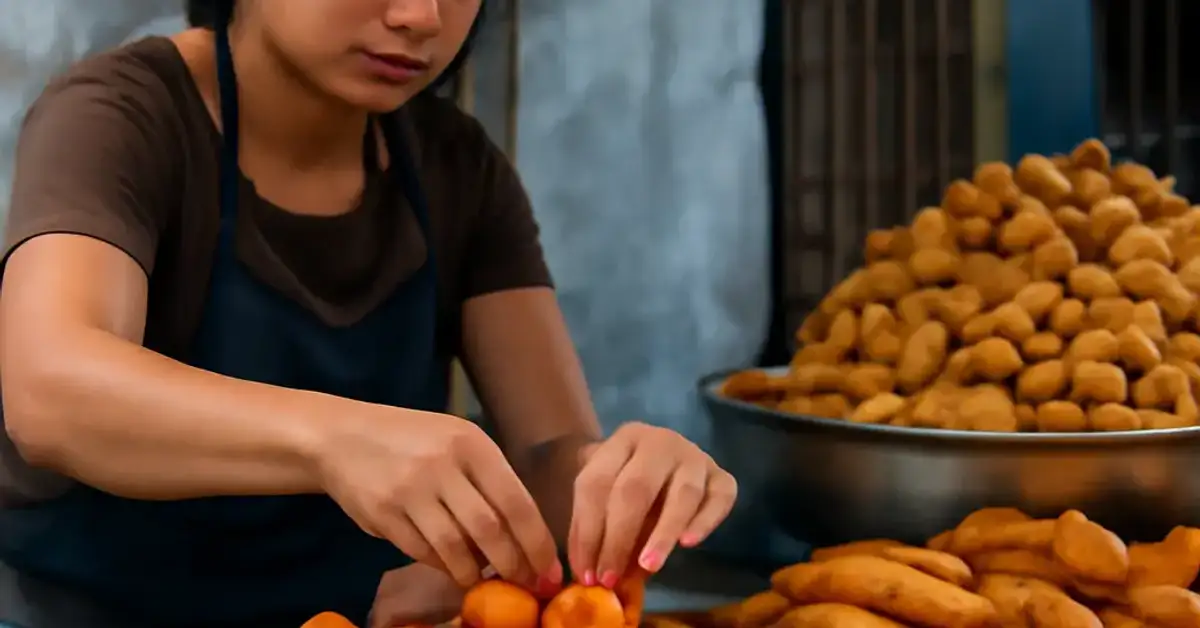
Kwek kwek is perhaps the most recognizable Filipino street food. A hard-boiled quail egg is dipped in an orange batter – the color comes from achuete seeds, not artificial dye, traditionally – then deep-fried until crisp. It’s served with a vinegar dip spiked with chili and shallots. The contrast between the creamy yolk and the crunchy shell is pure genius. Kwek kwek represents the resourcefulness of using small, cheap eggs and turning them into a standout snack.
Fish Balls Philippines
No school dismissal is complete without a paper cone of fish balls Philippines style. These are made from minced fish (usually round scad or tilapia) mixed with flour and seasonings, shaped into balls, and deep-fried on the spot. Vendors serve them on bamboo skewers with a choice of sauces: sweet, spicy, or a mix of both. The fun is in the dip – kids and adults alike argue over which sauce is best. Fish balls Philippines are a rite of passage for anyone growing up in the country.
Banana Cue
Banana cue is sweet comfort on a stick. Whole saba bananas are peeled, rolled in brown sugar, and deep-fried until the sugar caramelizes into a brittle, golden coating. It’s a portable dessert that fills the air with a wonderful burnt-sugar aroma. Banana cue vendors often station themselves near jeepney terminals, offering commuters a quick energy boost. This snack is a perfect example of how traditional Filipino snacks turn the simplest produce into something extraordinary.
Turon Snack
Turon snack, also called deep-fried banana spring roll, takes the saba banana and wraps it with a strip of jackfruit in a thin spring roll wrapper. It is then fried until crispy and coated with caramel. Some vendors add a sprinkle of sesame seeds for extra nuttiness. Turon snack is a beloved street food tradition that often appears in merienda (afternoon snack) time. It’s crunchy, sweet, and satisfyingly messy.
Filipino Barbecue
Filipino barbecue is not like any other. Pork is sliced thin, marinated overnight in a mixture of soy sauce, calamansi, garlic, brown sugar, and pepper, then skewered and grilled over hot coals. The basting sauce – often banana ketchup mixed with more marinade – gives it a tangy sweetness. Filipino barbecue is served with a side of vinegar dip and sometimes steamed rice. It dominates every street corner at dusk, smoke rising as hungry commuters line up.
Other Must-Try Traditional Filipino Snacks
Beyond the big five, the story behind traditional Filipino street foods includes taho (silken tofu with sago pearls and arnibal syrup), isaw (grilled chicken intestines), adidas (grilled chicken feet), and kwek-kwek (the chicken egg version called tokneneng). There is also bibingka (rice cake cooked in clay pots), puto bumbong (purple sticky rice steamed in bamboo tubes), and camote cue (sweet potato version of banana cue). Each of these authentic Filipino snacks offers a window into local tastes and traditions.
Sweet, Savory, Smoky, and Tangy: The Flavor Science of Filipino Street Food
Philippine street food culture thrives on flavor contrast. You’ll find kwek kwek served with a sour-spicy vinegar dip, fish balls Philippines style paired with sweet sauce, and Filipino barbecue glazed with a sweet-tangy basting. This combination of sweet, savory, smoky, and tangy reflects the Filipino palate’s love for sinigang (sour soup) and adobo (salty-sour braise). The street food traditions mimic what Filipinos eat at home: rice, meat, and vegetables always balanced with a dipping sauce. The dipping sauces themselves – toyomansi (soy + calamansi), suka’t sili (vinegar + chili), and sweet chili sauce – are a complete lesson in Philippine food culture. For a related guide, see 14 Filipino Dishes Combined With Rich Heritage Stories.
Regional Variations That Shape the Story Behind Traditional Filipino Street Foods
The Philippines has over 7,600 islands, and each region puts its own spin on traditional Filipino snacks. In Bicol, you will find kwek kwek served with a coconut milk and chili sauce instead of vinegar. In Ilocos, Filipino barbecue is often grilled with bagnet (crispy pork belly) instead of the standard pork cut. In Cebu, fish balls Philippines style might be made from local danggit (rabbitfish). These regional differences are not just curiosities – they are the living story behind traditional Filipino street foods. They prove that Filipino food heritage is not static; it adapts to what grows and swims nearby. When you travel from one province to another, the street food map changes entirely.
How Regional Traditions Influence Street Food in the Visayas and Mindanao
In the Visayas, street food traditions lean toward grilled items because of the strong local barbecue culture. Vendors in Iloilo serve a version of turon snack that includes ripe mango instead of jackfruit. In Mindanao, where coconut and spicy flavors dominate, local food vendors might offer kwek kwek with a rich coconut-based sauce tinged with turmeric. These regional touches make food tourism Philippines an endless adventure. You can eat banana cue in twenty places and find twenty different levels of sweetness and caramelization.
Why Street Food Remains an Important Cultural Experience
For Filipinos, street food traditions are not just about the snack – they are about the moment. Standing in front of a vendor’s cart, watching the oil bubble and the smoke rise, is a communal ritual. Local food vendors represent entrepreneurship with heart. They are often mothers supporting their children, retirees supplementing pensions, or young entrepreneurs testing their first business. Eating their food is a direct way to support local livelihoods. Affordable Filipino food ensures that no one is left out of the experience – from the office worker to the street child. That inclusivity is at the core of Filipino food heritage.
How Street Food Connects You to Filipino Heritage
Every bite of Filipino street food carries memory. The story behind traditional Filipino street foods is also the story of grandparents who walked to market with a coin, of parents who met over a cart of fish balls Philippines style, of families reuniting over a shared plate of Filipino barbecue. Street food traditions are passed down not through cookbooks but through practice and palate. When you eat authentic Filipino snacks cooked by a local food vendor, you are tasting the archives of Philippine culinary culture.
Chef Juan Gadi’s Take on the Story Behind Traditional Filipino Street Foods
I always tell guests that the best introduction to Philippine food culture is not in a fine dining restaurant – it is on the street. As a chef who grew up in the Philippines and now works in Bali, I carry the flavors of Filipino street food in every dish I create. When I prepare kwek kwek for a private dinner at Kilig Filipino Warung, I use the same technique the vendors use, but I elevate the dip with local Balinese chili. The story behind traditional Filipino street foods is about respect for simplicity. You don’t need expensive ingredients to make something unforgettable. You need care, timing, and the right sauce. For a related guide, see 10 Filipino Food Experiences Travelers Love in Bali.
A Personal Reflection on Filipino Food Heritage
Every time I see a local food vendor carefully turning banana cue in hot oil, I am reminded of my aunt who sold turon snack outside my school. That memory grounds me. Traditional Filipino snacks are not just nostalgic – they represent an entire economic and social system built by ordinary people. As food tourism Philippines grows, I hope more travelers seek out these vendors and listen to their stories. The authentic Filipino snacks they sell are not just food; they are living history.
Practical Checklist for First-Time Visitors Exploring Filipino Street Food
| Snack | Best Time to Eat | Price Range (PHP) | Don’t Miss |
|---|---|---|---|
| Kwek kwek | Afternoon merienda | 10–20 per stick | Spicy vinegar dip |
| Fish balls | Any time | 5–10 per stick | Sweet chili sauce |
| Banana cue | Morning or afternoon | 15–20 per stick | Crispy caramel coating |
| Turon snack | Afternoon snack | 15–25 per piece | Jackfruit filling |
| Filipino barbecue | Dusk to late evening | 20–50 per stick | With vinegar dip and rice |
| Isaw | Grill time | 10–20 per stick | Spiced vinegar |
| Taho | Early morning | 15–25 per cup | Warm and sweet |
Useful Resources
To dive deeper into the story behind traditional Filipino street foods, explore these trusted sources:
- Food Stories Philippines: The History of Filipino Street Food – A well-researched article on how street vendors shaped the nation’s eating habits.
- Rappler: Philippine Street Food Culture Guide – A practical guide for visitors and locals alike, covering the most popular traditional Filipino snacks and where to find them.
Frequently Asked Questions About Story Behind Traditional Filipino Street Foods
What is the story behind traditional Filipino street foods ?
The story behind traditional Filipino street foods is rooted in post-war resourcefulness, when vendors turned cheap local ingredients into quick, flavorful snacks for busy communities.
How did Filipino street food culture begin?
Philippine street food culture began in crowded marketplaces and town plazas, where vendors set up mobile carts offering fried and grilled snacks to workers, students, and commuters.
What are the most popular Filipino street foods?
The most popular Filipino street food items include kwek kwek, fish balls Philippines style, banana cue, turon snack, Filipino barbecue, isaw, and taho.
Why is street food important in the Philippines?
Street food traditions provide affordable meals, support local livelihoods, and foster community connections, making them essential to daily life and Filipino food heritage.
How do Filipino street foods reflect local culture?
Traditional Filipino snacks showcase the country’s love for bold flavor contrasts, communal eating, and resourcefulness – all core values of Philippine food culture.
What ingredients are commonly used in Filipino street food ?
Common ingredients include saba bananas, quail eggs, fish, pork, jackfruit, brown sugar, calamansi, soy sauce, vinegar, and chili – all affordable and widely available.
Which street foods should first time visitors try?
First-time visitors should start with kwek kwek, fish balls Philippines style, banana cue, and Filipino barbecue – they are approachable and represent the best of authentic Filipino snacks.
How has Filipino street food evolved over time?
The story behind traditional Filipino street foods continues to evolve with new flavor infusions, food safety improvements, and even upscale versions in restaurants while street vendors keep the classic methods alive.
What role do street vendors play in Filipino communities?
Local food vendors are entrepreneurs, community anchors, and keepers of Filipino food heritage, often supporting their families while feeding their neighborhoods.
How do regional traditions influence street food in the Philippines?
Street food traditions vary by region – Bicol adds coconut chili sauce to kwek kwek, while the Visayas prefer grilled skewers – reflecting local ingredients and tastes.
What are the most affordable Filipino street foods?
Affordable Filipino food like fish balls Philippines style and taho can cost as little as 5 to 20 pesos per serving, making them accessible to everyone.
Why do Filipinos love street food snacks?
Filipinos love traditional Filipino snacks because they are tasty, budget-friendly, and deeply tied to memories of school days, fiestas, and community gatherings.
How does street food connect people to Filipino heritage?
Eating authentic Filipino snacks from a local food vendor connects people to generational recipes and the everyday rhythms of Philippine food culture.
What makes Filipino street food unique?
Filipino street food is unique because of its explosive flavor variety – sweet, salty, sour, smoky – all on one cart, plus the communal, vendor-to-customer intimacy.
What street food experiences should travelers not miss in the Philippines?
Travelers should not miss the bustling night markets near universities, where they can try kwek kwek, fish balls Philippines style, and Filipino barbecue all in one evening.
Is Filipino street food safe to eat?
Yes, when you choose busy vendors with high turnover, fresh ingredients, and hot frying temperatures – common practices among experienced local food vendors.
Can I find vegetarian Filipino street food ?
While most Filipino street food includes meat or fish, you can find banana cue, turon snack, camote cue, and taho, which are all vegetarian-friendly.
What dipping sauces come with Filipino street food ?
Common dipping sauces are sweet chili sauce, spiced vinegar, soy-calamansi (toyomansi), and sukang iloko – each adds a different layer to traditional Filipino snacks.
Where can I find the best Filipino street food ?
Look near schools, churches, transport terminals, and night markets – these are the hubs where Philippine street food culture is most vibrant.
What is the best time of day to eat Filipino street food ?
Afternoon merienda (3–5 PM) and early evening are peak times, but local food vendors serve authentic Filipino snacks from morning until late night.
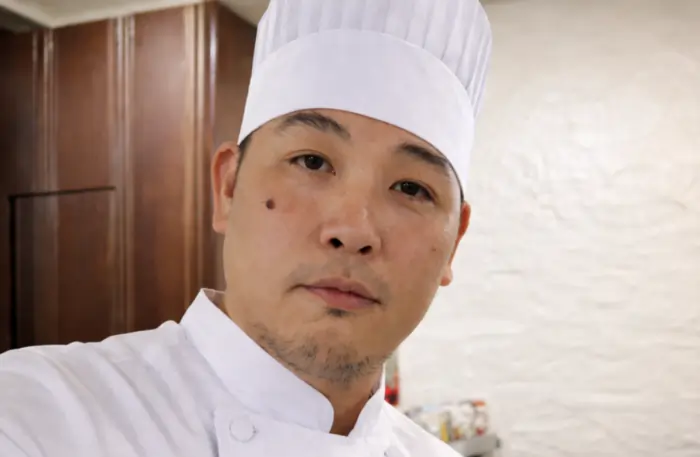
Chef Juan Gadi brings the heart of Filipino hospitality to Ubud, Bali. As an Executive Chef and consultant, he specializes in creating intimate, curated dining experiences that tell a story through every dish. Whether leading the kitchen at Kilig Filipino Warung or hosting a private villa dinner, Chef Juan’s approach is defined by warmth, modern technique, and a commitment to culinary excellence.