Filipino Flavors That Blend Beautifully With Bali Key Takeaways
Chef Juan Gadi brings the heart of Filipino hospitality to Ubud, Bali, creating intimate dining experiences that marry the bold, sour, and savory notes of Filipino cuisine with the aromatic spices and tropical ingredients of Balinese cooking.
- Filipino Flavors That Blend Beautifully With Bali start with umami-rich adobo and tangy sinigang, both enhanced by Balinese spices and fresh seafood.
- Travelers love how Filipino comfort food like sisig and lechon adapts to Bali’s island setting, using local chili, coconut, and grilling techniques.
- Sweet and creamy Filipino desserts , including halo-halo and tocino-inspired glazes, pair perfectly with Bali’s coffee culture and tropical fruit.
Why Chef Juan Gadi Brings Filipino Flavors That Blend Beautifully With Bali to Ubud
As an Executive Chef and culinary consultant in Ubud, Bali, Chef Juan Gadi specializes in crafting intimate, curated dining experiences that tell a story through every dish. Whether leading the kitchen at Kilig Filipino Warung or hosting a private villa dinner, his approach is defined by warmth, modern technique, and a commitment to culinary excellence. For Chef Juan, the connection between Filipino cuisine and Balinese cuisine is not just professional—it is deeply personal. Both islands share a love for tropical flavors, fresh seafood, and communal eating. By blending Filipino spices with Balinese ingredients, he creates meals that feel both familiar and exotic to travelers from around the world. For a related guide, see 10 Filipino Flavors That Blend Well With Bali Culture.
What Filipino Flavors Blend Well With Balinese Cuisine?
When travelers ask, what Filipino flavors blend well with Balinese cuisine, the answer lies in the shared foundations of island cuisine. Both culinary traditions emphasize fresh herbs, citrus, coconut, and grilled proteins. Filipino dishes bring bold Filipino sour flavors like tamarind and calamansi, while Balinese cuisine offers complex spice pastes such as base gede. Together, they create a harmony of savory, tangy, and aromatic notes. Below, Chef Juan highlights nine essential Filipino flavors that naturally complement Bali’s food culture. For a related guide, see 7 Filipino Dishes That Match Bali’s Tropical Vibes.
1. Adobo: A Umami Bridge Between Cultures
Filipino adobo is the national dish—meat braised in vinegar, soy sauce, garlic, and bay leaves. In Bali, Chef Juan adapts adobo by using local palm vinegar and adding Balinese long pepper for a gentle heat. The result is a Filipino fusion meal that pairs beautifully with steamed rice and sambal matah. Travelers love how the familiar comfort of adobo meets the island’s bold Balinese spices.
2. Sinigang: Sourness That Cuts Through Tropical Heat
Sinigang is a tamarind-based soup known for its Filipino sour flavors. In Bali, Chef Juan substitutes tamarind with local bilimbi or asam gelugor, creating a broth that is both refreshing and cleansing. He adds Balinese white snapper and water spinach, making it one of the best Filipino seafood dishes for Bali’s coastal climate. This dish answers how do tropical Filipino flavors match Bali cuisine—with bright acidity that balances rich, spicy meals.
3. Coconut: The Shared Soul of Island Cuisine
Coconut is a cornerstone of both Filipino coconut dishes and Balinese cooking. Chef Juan uses freshly grated coconut in ginataang kalabasa (pumpkin stew) and blends it with Balinese turmeric, galangal, and lemongrass. The creamy, sweet notes of coconut unify the two traditions, creating a dish that feels like a natural expression of tropical Asian dining ideas.
4. Calamansi: Citrus That Brightens Balinese Sate
Calamansi, the small Filipino citrus, offers a distinct floral sourness. Chef Juan uses calamansi juice as a finishing touch on Balinese sate lilit—minced seafood on lemongrass skewers. The citrus cuts through the richness of coconut and chili, answering which Filipino ingredients work well with Balinese recipes with a simple, versatile fruit. It is also a key ingredient in many Filipino sauces used for dipping.
5. Sisig: Sizzling Comfort Food for Bali Nights
Sisig is a sizzling dish of chopped pork, chicken liver, and onions, traditionally flavored with calamansi and chili. Chef Juan reimagines it as Filipino comfort food in Bali by using Balinese free-range pork and adding crispy fried shallots. Served with a side of steamed rice and lime wedges, sisig has become a favorite among travelers seeking authentic Filipino flavors abroad in a tropical setting.
6. Lechon: Crispy Skin Meets Balinese Spice Rubs
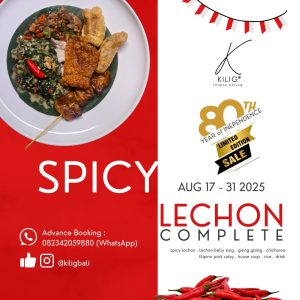
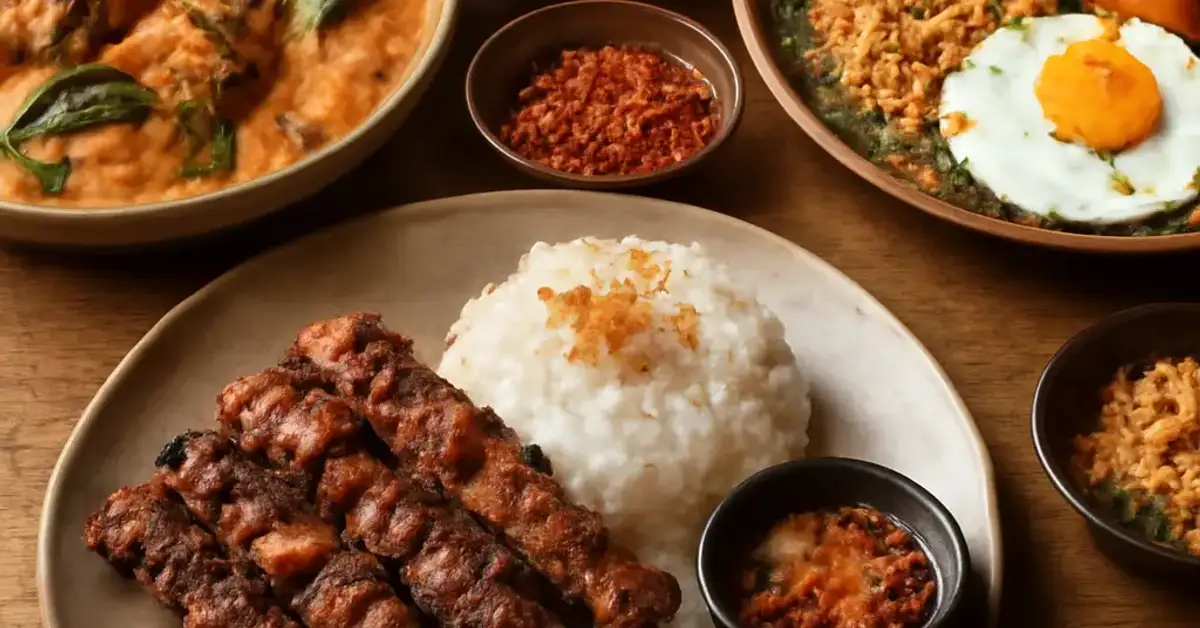
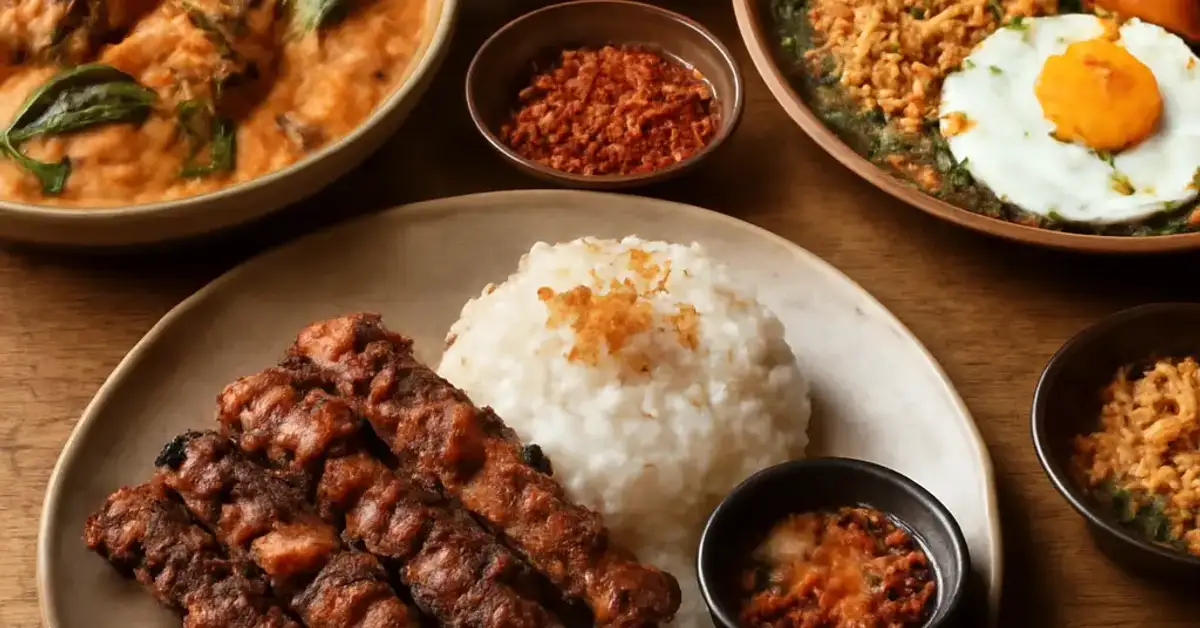
Lechon, the iconic Filipino roast pig, is celebrated for its crispy skin and tender meat. In Bali, Chef Juan seasons the pork with a Balinese base gede rub before slow-roasting, then serves it with a tangy liver sauce and sambal. This combination showcases why Filipino grilled dishes and Balinese food culture are a perfect match, especially for large Filipino family meals or festive dinners.
7. Barbekyu: Street Food Culture on Bali Beaches
Filipino barbecue—skewered pork or chicken glazed with a sweet soy marinade—is a staple of Filipino street food. Chef Juan grills these skewers over coconut charcoal and serves them with a Balinese peanut sauce. This dish embodies Filipino street food culture abroad and has become a popular order at Bali restaurants that feature Filipino inspired Bali dining.
8. Halo-Halo: A Dessert That Celebrates Tropical Abundance
Filipino halo halo is a shaved ice dessert layered with sweet beans, coconut, jellies, and fruits, topped with leche flan and ube ice cream. Chef Juan adds Balinese jackfruit, palm sugar syrup, and a shot of local cold-brew coffee. This answers why do Filipino desserts pair well with Bali coffee culture—the creamy sweetness balances the earthy bitterness of Bali’s famous coffees. It is a refreshing cap to any Filipino food experiences for travelers.
9. Tocino: Sweet Cure Meets Balinese Breakfast Rituals
Tocino is a sweet cured pork often served as part of Filipino breakfast dishes. Chef Juan marinates pork in a mix of pineapple juice and Balinese honey, then grills it until caramelized. Served with garlic rice and a fried egg, it fits perfectly into Bali’s laid-back morning culture. Tourists love this dish because it answers how can tourists enjoy Filipino flavors in Bali in a familiar, hearty form.
Why Filipino and Bali Flavors Pair Naturally
Why do Filipino and Bali flavors pair naturally? The answer lies in geography and history. Both archipelagos share a tropical climate that yields an abundance of tropical flavors: coconut, lime, chili, and fresh seafood. Both cultures celebrate Filipino hospitality and the Balinese concept of “manyama” (eating together). Chef Juan’s cooking highlights how Asian fusion cuisine can feel authentic when rooted in these shared traditions. He notes that travelers frequently ask, how does Filipino food complement Bali dining culture—and the answer is ease. Filipino dishes are designed to be shared, and Bali’s warungs and fine dining venues alike welcome communal plates.
How Does Filipino Cuisine Influence Bali Food Experiences?
How does Filipino cuisine influence Bali food experiences? Beyond specific dishes, the influence is felt in the spirit of cooking. Chef Juan brings Filipino cultural dining practices—like “salo-salo” (shared meal) and hand-eating with rice—to his Ubud kitchen. He also introduces Filipino sauces and spices such as bagoong (fermented shrimp paste) and patis (fish sauce) into Balinese recipes, creating new layers of umami. For tourists, this means a chance to taste island inspired Filipino dishes in a destination that cherishes its own culinary heritage.
Best Filipino and Balinese Flavor Combinations to Try
For those asking what are the best Filipino and Balinese flavor combinations, Chef Juan recommends starting with adobo paired with Balinese long pepper and palm sugar. Another standout is sinigang with Balinese white snapper and turmeric. He also suggests sampling sisig with sambal matah, and halo-halo with a drizzle of Bali coffee syrup. These combinations show why Filipino tropical recipes are perfect for Bali vacations—they are vibrant, comforting, and deeply connected to the island’s ingredients.
Why Travelers Love Filipino Inspired Meals in Bali
Why do travelers love Filipino inspired meals in Bali? The answer is rooted in novelty and comfort. Many visitors, especially Filipino food lovers and expats, crave the taste of home while exploring a new culture. Others discover Filipino flavors for the first time through the lens of Balinese ingredients, making the experience feel both adventurous and approachable. Chef Juan’s private dinners and warung offerings are designed to be Filipino food experiences for travelers that are both educational and delicious. He also makes sure to serve Filipino snacks like turon (banana spring rolls) alongside Balinese kopi, creating a bridge between the two cultures. For a related guide, see 10 Filipino Food Experiences Travelers Love in Bali.
Useful Resources
For more on Balinese cooking techniques and ingredients, visit Bali Food’s Cuisine Guide. To explore authentic Filipino recipes you can try at home or adapt for travel, check out Filipino Recipes’ Culinary Guide.
Frequently Asked Questions About Filipino Flavors That Blend Beautifully With Bali
What Filipino flavors blend well with Balinese cuisine ?
Bold Filipino sour flavors from tamarind and calamansi, umami from adobo, creamy coconut, and sweet glazes from tocino all complement Balinese spices and fresh seafood.
Why do Filipino and Bali flavors pair naturally ?
Both cuisines are rooted in tropical flavors, shared ingredients like coconut and chili, and a cultural emphasis on communal dining and hospitality.
How does Filipino food complement Bali dining culture ?
Filipino comfort food is designed for sharing, which aligns perfectly with Bali’s warung culture and family-style dining traditions.
What Filipino dishes taste best in Bali ?
Adobo, sinigang, sisig, lechon, and halo-halo are top choices when prepared with local Balinese ingredients like long pepper, white snapper, and jackfruit.
Which Filipino ingredients work well with Balinese recipes ?
Calamansi, bagoong, coconut milk, and palm vinegar are versatile ingredients that enhance Balinese spice pastes and grilled dishes.
Why do travelers love Filipino inspired meals in Bali ?
Travelers enjoy the novelty of discovering authentic Filipino flavors abroad while experiencing the tropical ambiance and fresh produce that Bali offers.
How do tropical Filipino flavors match Bali cuisine ?
Bright acidity from citrus and tamarind cuts through the richness of Balinese coconut and chili, creating balanced, vibrant meals.
What Filipino street foods are popular in Bali ?
Filipino street food like barbecue skewers and turon are popular, especially when paired with Balinese sambal and coffee.
How does Filipino cuisine influence Bali food experiences ?
Chef Juan integrates Filipino sauces and spices into Balinese menus, introducing new umami layers and communal dining practices.
What are the best Filipino and Balinese flavor combinations ?
Adobo with long pepper, sinigang with turmeric, sisig with sambal matah, and halo-halo with Bali coffee are standout combinations.
Why are Filipino tropical dishes perfect for Bali vacations ?
These dishes are light yet satisfying, using fresh seafood, coconut, and citrus that match the island’s climate and culinary style.
How do Filipino spices enhance Balinese meals ?
Filipino spices like garlic, black pepper, and bay leaves add depth to Balinese base gede, while patis and bagoong boost umami.
What Filipino comfort foods fit Bali island dining ?
Sisig, adobo, and tocino are hearty enough for a filling meal yet light enough for Bali’s warm climate when served with fresh vegetables and sambal.
How can tourists enjoy Filipino flavors in Bali ?
Visit Bali restaurants like Kilig Filipino Warung, book a private dinner with Chef Juan, or order dishes like adobo and halo-halo at local fusion spots.
Why do Filipino desserts pair well with Bali coffee culture ?
The sweetness of leche flan, ube, and coconut in Filipino desserts balances the bitterness and earthiness of Bali’s arabica and robusta coffees.
Is it easy to find Filipino food in Ubud?
Yes, Kilig Filipino Warung and Chef Juan’s private dining events offer a range of Filipino fusion meals in a welcoming tropical setting.
Can I book a private Filipino dining experience in Bali?
Chef Juan Gadi hosts intimate villa dinners and curated tasting menus that showcase Filipino cuisine and Bali hospitality together.
What makes Kilig Filipino Warung special for travelers?
It offers authentic Filipino flavors abroad with a Balinese twist, using local produce and traditional cooking techniques in a cozy warung setting.
How does Chef Juan Gadi blend Filipino and Balinese cooking?
He marries Filipino recipes with Balinese ingredients like long pepper, turmeric, and coconut, and uses modern techniques to create harmonious Asian fusion cuisine.
What is the best time to visit Bali for Filipino food tourism?
Year-round is great, but the dry season (April–October) is ideal for outdoor dining, cooking classes, and exploring Bali culinary tourism offerings.
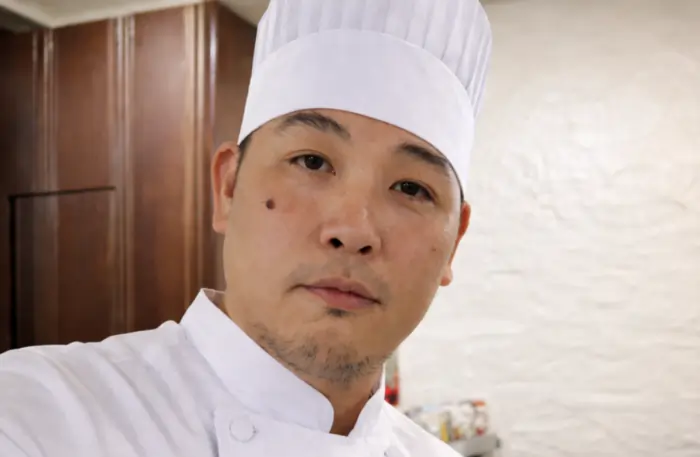
Chef Juan Gadi brings the heart of Filipino hospitality to Ubud, Bali. As an Executive Chef and consultant, he specializes in creating intimate, curated dining experiences that tell a story through every dish. Whether leading the kitchen at Kilig Filipino Warung or hosting a private villa dinner, Chef Juan’s approach is defined by warmth, modern technique, and a commitment to culinary excellence.