Bayanihan Through Shared Meals and Gatherings Key Takeaways
Bayanihan through shared meals and gatherings is the living heartbeat of Filipino community spirit .
- Bayanihan through shared meals and gatherings transforms simple dining into a powerful act of community cooperation and mutual support.
- Filipino communal dining traditions like potluck parties and family feasts reinforce social harmony , unity and solidarity , and neighborhood support systems.
- Modern expressions of bayanihan —from weekend cookouts to online food drives—show that the spirit of community cooperation remains as strong as ever.
What Is Bayanihan in Filipino Culture? The Spirit Behind the Word
The first time I saw bayanihan in action, I was a young cook watching my lola’s neighbors appear at her doorstep carrying pots of sinigang, trays of lumpia, and baskets of ripe mangoes. It was a Tuesday, no special occasion—just someone’s family gathering that had turned into a block party. That spontaneous sharing of food and time is the essence of bayanihan. In the Philippines, bayanihan originally referred to the practice of villagers physically moving a whole bamboo house to a new location, neighbors lifting it together on their shoulders. Today, the word has grown to mean any form of collective effort for the common good.
At its core, bayanihan is about recognizing that no one thrives alone. It weaves through every layer of the Filipino lifestyle, from the way families pool money for a cousin’s college tuition to how entire barangays cook thousands of servings of pancit for a town fiesta. This community spirit isn’t a relic of the past—it’s a daily practice that shows up every time a neighbor shares a dish or a friend drops by with coffee unannounced.
How Shared Meals Reflect Bayanihan: More Than Eating Together
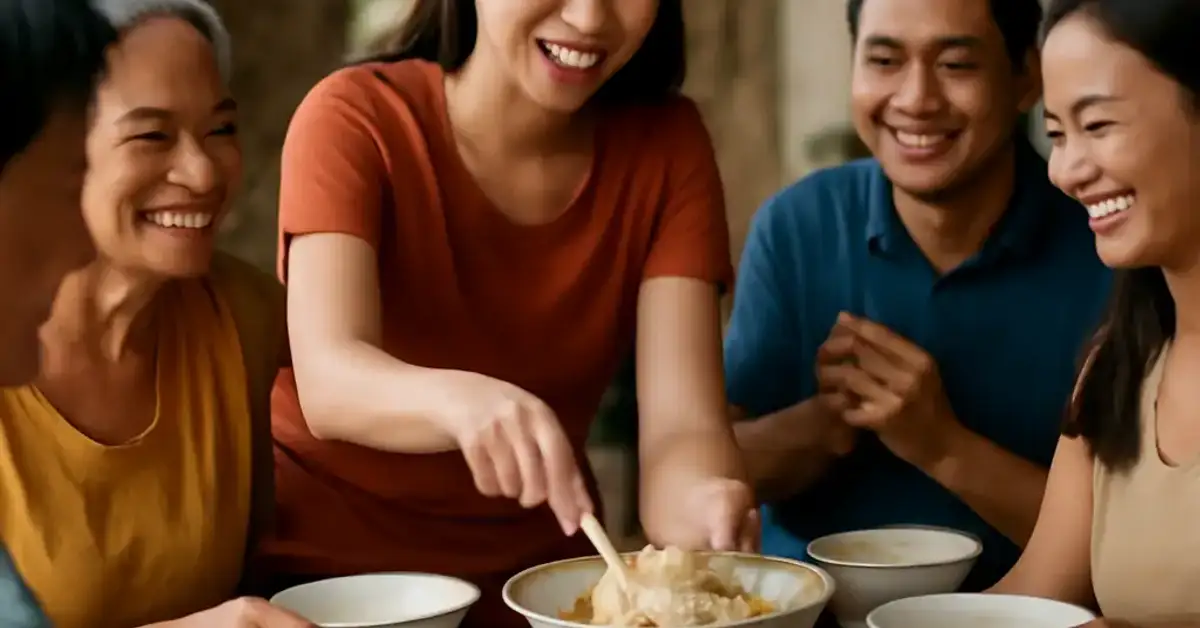
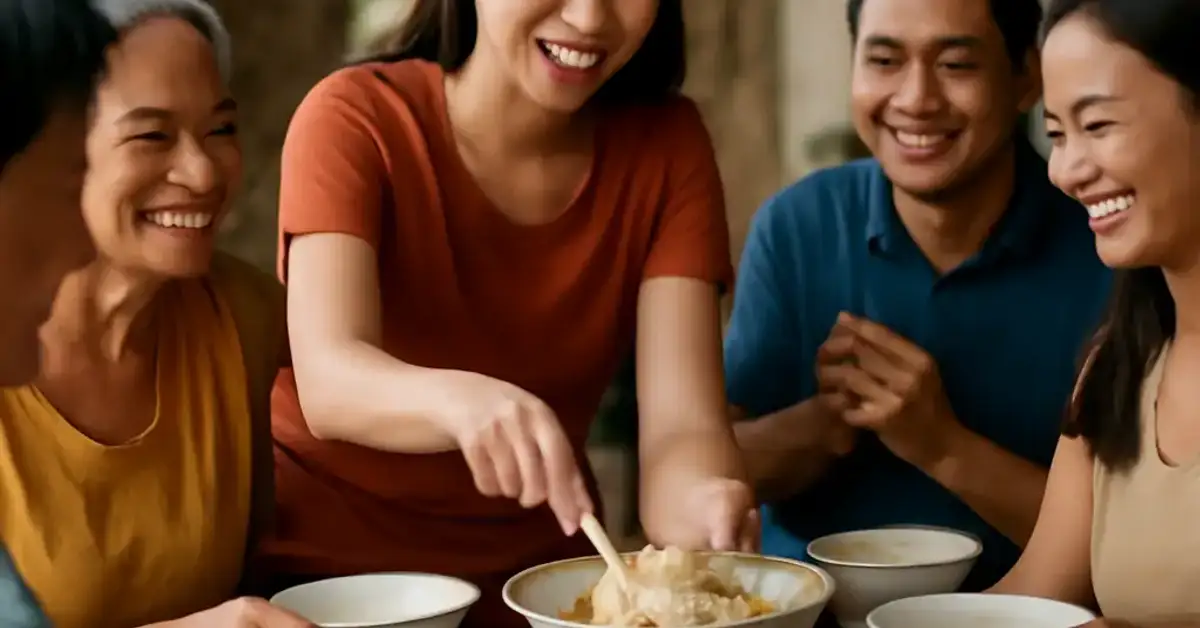
Shared meals are the most visible and delicious expression of bayanihan through shared meals and gatherings. When Filipinos cook for each other, they aren’t just feeding bodies—they’re building social connections and affirming Filipino values of hospitality and generosity in Filipino communities. In my own kitchen at Kilig Filipino Warung in Ubud, I see it every day. Guests who start as strangers leave as friends, sharing stories over adobo and kare-kare. That transformation happens because communal dining strips away formality and invites everyone to the same table. For a related guide, see Filipino Food Traditions: 7 Essential Customs Every Traveler Must Know.
Food sharing carries deep symbolism in Filipino culture. When you bring a dish to a neighbor, you’re saying, “I see you, and I care about your well-being.” The act of potluck traditions and food sharing—where everyone contributes a plate—mirrors the older practice of abuloy (voluntary contribution). Every spoonful is a reminder that community cooperation and mutual support are more than ideals: they’re practiced daily, one meal at a time.
Why Are Gatherings Important in Filipino Communities? The Social Glue
In the Philippines, no one eats alone if there’s a single extra chair. Filipino gatherings are never just about the event—they are the stage where cultural significance of gatherings and celebrations plays out. Whether it’s a baptism, a birthday, a fiesta, or a simple Sunday lunch, these family-centered social customs create a rhythm of belonging. The question “why are gatherings important in Filipino communities” has a simple answer: because they reweave the social fabric every time they happen.
I’ve cooked for dozens of these gatherings—from intimate villa dinners to sprawling fiestas—and the pattern is always the same. The eldest relative blesses the food, children run between tables, teenagers argue over the last piece of lechon, and grandparents nod in quiet satisfaction. This is how cultural identity through communal experiences is passed down. Strengthening relationships through shared meals isn’t a chore; it’s a joy that Filipinos protect fiercely.
The Role of Festivals and Family Reunions
Filipino celebrations like the Pahiyas Festival, Ati-Atihan, and countless town fiestas take shared meals to a communal scale. Entire streets become dining halls. Traditional Filipino values and social harmony are on full display as rich and poor, young and old, sit side by side. Family reunions work the same way on a smaller scale. They reinforce family traditions and remind everyone that collective effort—whether organizing the games, cooking the food, or cleaning up afterwards—keeps the unit strong.
How Does Food Bring People Together in the Philippines? A Practical Look
When people ask me how does food bring people together in the Philippines, I point to the dulang—the low dining table where families once ate from shared platters. That practice of eating from the same plate (with clean hands, of course) is the ultimate symbol of communal dining. It demands trust and closeness. Even now, in modern homes with Western dining sets, Filipinos instinctively push the plates to the center of the table so everyone can share.
Food sharing in Filipino culture works on three levels. First, it meets the practical need of neighborhood support systems—when a family faces hardship, neighbors bring cooked meals. Second, it creates emotional bonds formed through shared experiences—the laughter over a spicy dish, the comfort of a familiar soup. Third, it communicates Filipino hospitality: offering food is the first and warmest gesture of welcome. In my private dining events, I always start with a dish that sparks conversation—like a reimagined sinigang with seasonal Balinese produce—because the story behind the dish opens hearts.
7 Powerful Traditions That Build Community Through Food
Let me share seven traditions that beautifully illustrate bayanihan through shared meals and gatherings. Each one is a thread in the larger tapestry of community resilience and cooperation.
1. Pahiyas and Town Fiestas
These grand Filipino celebrations involve the entire barangay decorating houses with agricultural products and preparing enough food for hundreds of visitors. It’s a living display of community spirit and gratitude.
2. The Sunday Lunch
The quintessential family gathering. Everyone returns to the ancestral home, and the kitchen becomes a hive of collective effort. The meal stretches for hours, covering everything from gossip to deep conversations about the future.
3. Potluck Parties (Tara, Sama-Sama)
Each guest brings a dish, ensuring a diverse feast and spreading the cost. This is a modern expression of food sharing and community cooperation that even overseas Filipinos maintain abroad.
4. Kainan sa Daan (Street Feasts)
During fiestas, tables line the streets, and any passerby is invited to eat. This radical hospitality and generosity in Filipino communities shows that social harmony extends beyond close circles.
5. The Merienda Tradition
Afternoon snacks are a cherished communal activity. Neighbors drop by for coffee and bibingka, turning a simple break into a moment of community cooperation and connection.
6. Kamayan (Eating with Hands)
A communal dining experience where food is spread on banana leaves and everyone eats with their hands. It breaks down barriers and reinforces cultural identity through touch and taste.
7. Funeral Wakes and Lamay
Even in sorrow, bayanihan shines. Neighbors and relatives bring food, set up coffee stations, and keep the bereaved company. These community resilience and cooperation rituals prove that support is unconditional.
What Role Does Hospitality Play in Bayanihan? The Heart of Generosity
Filipino hospitality is legendary, but it isn’t just about being polite. It is a cornerstone of bayanihan through shared meals and gatherings. When a Filipino host insists you eat more, they are performing a deeply rooted cultural duty: ensuring no guest leaves hungry or unloved. This hospitality and generosity in Filipino communities is a form of community cooperation in itself—a silent promise that everyone is cared for.
In my role as an Executive Chef, I’ve learned that hospitality has to be genuine or it fails. I’ve seen the difference between a perfectly plated dish served with cold efficiency and a simple bowl of champorado served with a warm smile. The second always wins. Filipino customs around hospitality teach us that the spirit behind the food matters more than the ingredients. That’s why bayanihan cannot be faked—it must be felt.
How Family Celebrations Strengthen Community Bonds
Think of family gatherings as training grounds for community spirit. When a child watches their parents cook for a fiesta, they learn that collective effort is normal. When cousins are asked to help serve food, they absorb the lesson of neighborhood support. These family traditions build a framework for unity and solidarity that extends beyond the household to the entire community. How family celebrations strengthen community bonds becomes obvious when you see how naturally Filipinos form community groups, parent-teacher associations, and volunteer teams—they’ve been practicing cooperation at the dining table their whole lives.
Why Is Community Cooperation Valued in Filipino Culture? Roots and Relevance
The question “why is community cooperation valued in Filipino culture” has historical and practical answers. Historically, islands with rugged terrain and frequent typhoons taught early Filipinos that survival depended on helping each other. Planting rice, building houses, and catching fish all required cooperative effort. That pragmatic need evolved into a cultural value that persists even in modern cities.
Community cooperation and mutual support also have emotional roots. The concept of kapwa (shared identity) treats the other person as an extension of the self. When you help a neighbor, you help yourself. Bayanihan through shared meals and gatherings is the everyday embodiment of kapwa. It turns abstract philosophy into tangible acts of food sharing and communal activities.
How Is Bayanihan Practiced in Modern Society?
If you think bayanihan belongs to rural villages, think again. How is bayanihan practiced in modern society is a vibrant story of adaptation. Overseas Filipino communities carry the tradition to every continent. In Dubai, Hong Kong, or New York, Filipinos organize potluck parties, Filipino celebrations, and charity events that mirror the old barangay spirit. Social media groups have become virtual barangays, where members crowdsource help for medical bills or celebrate milestones with synchronized cake pictures.
Even in my kitchen in Ubud, I practice a version of bayanihan. My team comes from different islands and backgrounds, but we share the same table for our staff meals. We strengthen relationships through shared meals daily, solving problems together over a plate of caldereta. Modern expressions of bayanihan may look different, but the core—community resilience and cooperation—remains unchanged.
What Traditions Promote Unity in Filipino Gatherings? Rituals That Connect
Several Filipino customs are designed to foster unity through celebrations. The most iconic is the salo-salo, a feast where everyone eats simultaneously. The pabasa (chanting of the Passion story) during Holy Week unites whole neighborhoods in shared devotion and shared meals. The harana (serenade) is a more intimate tradition that often ends with refreshments. Each tradition, from potluck traditions and food sharing to community caroling, reinforces cultural identity and social cohesion in Filipino society.
These traditions also teach respect and inclusivity in Filipino gatherings. Elders are served first. Strangers are welcomed with the same warmth. Leftovers are wrapped for anyone who might need them. Cultural heritage through social traditions is not passive—it is actively performed and renewed every time a community gathers.
How Do Shared Meals Preserve Filipino Cultural Values?
How do shared meals preserve Filipino cultural values is a question I get often from students and tourists. My answer is always the same: shared meals are classrooms without walls. When a grandmother teaches her granddaughter how to make kinilaw, she isn’t just passing a recipe—she’s passing patience, sensory knowledge, and a cultural identity through communal experiences. The child learns that food sharing is love, that community spirit requires participation, and that Filipino values are lived, not just talked about.
The panlasa (taste) of home is a powerful anchor for cultural pride and belonging. For overseas Filipino workers, a single taste of tocino can trigger a flood of memories. That emotional bond is why bayanihan through shared meals and gatherings is such an effective vehicle for preserving cultural heritage through social traditions.
Emotional Bonds Formed Through Shared Experiences: The Science of Togetherness
There’s a reason emotional bonds formed through shared experiences are so powerful. Psychologists call it “communal coping”—the phenomenon where people facing challenges together develop stronger ties. In Filipino culture, this happens naturally over meals. A shared bowl of lugaw (rice porridge) during a family crisis, or a celebratory batchoy after a success, creates lasting neural connections between the food and the feeling.
In my private dining events, I often see this happen in real time. Strangers at a communal table begin by talking about the dish, then move to personal stories, and end with laughter and phone numbers exchanged. Bayanihan as a symbol of solidarity is not an abstract concept—it is visible in every table where people break bread together. Community resilience and cooperation are strengthened one shared experience at a time.
Bayanihan as a Symbol of Solidarity: From House Moving to Community Kitchens
The original image of bayanihan—neighbors lifting a bamboo house—is powerful because it shows collective effort at work. Today, that same spirit appears in community kitchens that feed thousands during typhoons, in pabaon (take-home food) culture, and in the way Filipino communities rally for a single family’s medical fund. Bayanihan as a symbol of solidarity reminds us that we are strongest when we act together.
Common Mistakes to Avoid When Exploring Bayanihan Through Shared Meals
As someone who has cooked for hundreds of cultural events, I’ve seen well-meaning outsiders—and even some Filipinos—misunderstand bayanihan through shared meals and gatherings. Here are three common mistakes and how to avoid them.
Mistake 1: Treating Bayanihan as a Performance. Bayanihan cannot be orchestrated for a photo op. It must be organic. Forced food sharing events where attendees don’t genuinely participate feel hollow. Solution: let the community lead the planning.
Mistake 2: Ignoring Hierarchy and Respect. Respect and inclusivity in Filipino gatherings require acknowledging elders and tradition holders. Jumping in to change the menu without consulting the nakatatanda (elders) can cause unintentional disrespect. Solution: ask before you act, especially in traditional settings.
Mistake 3: Over-Commercializing the Experience. Charging for every plate at a community event contradicts the spirit of hospitality and generosity in Filipino communities. Bayanihan is generous by nature. Solution: Keep the core gathering free and optional; monetize only additional services like cooking classes or merchandise.
Useful Resources
For deeper exploration of bayanihan through shared meals and gatherings and Filipino communal dining traditions, these resources offer excellent starting points.
- National Commission for Culture and the Arts (NCCA) – Filipino Traditions and Values: The official government body for Philippine culture provides extensive articles on bayanihan, traditional fiestas, and the role of food in cultural heritage.
- Philippine E-Journals and Cultural Texts: A growing digital library with academic papers and ethnographic studies on community cooperation, social harmony, and Filipino customs around food and gatherings.
Frequently Asked Questions About Bayanihan Through Shared Meals and Gatherings
What is bayanihan in Filipino culture ?
Bayanihan is a Filipino cultural concept of communal unity and cooperation. Originally, it referred to the practice of neighbors helping a family move their entire house to a new location. Today, it symbolizes any form of community spirit, collective effort, and mutual support, often expressed through shared meals and gatherings.
How do shared meals reflect bayanihan ?
Shared meals are a direct act of bayanihan through shared meals and gatherings. When Filipinos cook and eat together, they demonstrate food sharing, community cooperation, and hospitality and generosity in Filipino communities. The table becomes a place where social harmony and emotional bonds formed through shared experiences are strengthened.
Why are gatherings important in Filipino communities?
Filipino gatherings reinforce cultural identity through communal experiences and pass down family traditions. They create a space for community cooperation and mutual support, celebrate cultural significance of gatherings and celebrations, and keep Filipino values alive across generations.
How does food bring people together in the Philippines?
Food is a universal invitation in the Filipino lifestyle. Filipino communal dining traditions like kamayan (eating with hands) and potluck traditions and food sharing break social barriers. Food acts as a medium for strengthening relationships through shared meals and expressing Filipino hospitality.
What role does hospitality play in bayanihan ?
Filipino hospitality is the emotional engine of bayanihan. It turns ordinary communal dining into acts of generosity. Whether offering a dish to a stranger or hosting a family gathering, hospitality embodies the community spirit of bayanihan through shared meals and gatherings.
How do family celebrations strengthen community bonds?
Family celebrations like birthdays, fiestas, and reunions bring together multiple households. They require collective effort in food preparation and decoration. These events reinforce neighborhood support systems, social connections, and cultural identity through shared rituals and traditions.
Why is community cooperation valued in Filipino culture ?
Community cooperation is valued because it ensured survival in a challenging island environment and is deeply tied to the concept of kapwa (shared identity). It fosters social cohesion in Filipino society, builds community resilience, and keeps the community spirit alive.
How is bayanihan practiced in modern society?
Modern expressions of bayanihan include online fundraisers, community pantries, potluck gatherings among overseas Filipino groups, and even workplace food sharing traditions. Social media acts as a virtual barangay where bayanihan continues in new forms.
What traditions promote unity in Filipino gatherings ?
Respect and inclusivity in Filipino gatherings are promoted through traditions like salo-salo (shared feasts), pabasa (communal prayer), and potluck traditions and food sharing. These activities encourage unity and solidarity and reinforce cultural heritage through social traditions.
How do shared meals preserve Filipino cultural values?
Shared meals are living classrooms. When elders cook with younger generations, they pass down Filipino customs, family traditions, and the importance of community cooperation. Each recipe carries cultural identity through communal experiences and keeps Filipino culture dynamic.
What is the original meaning of bayanihan ?
The original meaning of bayanihan is the act of helping a neighbor move their house. The word comes from “bayani” (hero) and “bayan” (town or nation). It symbolizes collective effort and neighborhood support.
How can overseas Filipinos practice bayanihan ?
Overseas Filipino communities practice bayanihan by organizing Filipino celebrations, potluck parties, and charity drives. They replicate Filipino communal dining traditions abroad, keeping cultural identity and social connections alive across borders.
What is the role of fiestas in bayanihan ?
Fiestas are large-scale Filipino celebrations that require community cooperation. They showcase hospitality and generosity in Filipino communities, cultural heritage, and unity and solidarity through shared meals and communal activities.
What is kamayan and how does it relate to bayanihan ?
Kamayan is the Filipino communal dining tradition of eating with hands from a shared banana leaf spread. It embodies food sharing, community spirit, and cultural identity, making it a perfect expression of bayanihan through shared meals and gatherings. For a related guide, see 6 Filipino Meals Perfect for Private Villa Gatherings.
How does bayanihan help during disasters?
During crises, bayanihan becomes a powerful force of community resilience and cooperation. Neighbors organize food distribution, community kitchens, and shelter. This is bayanihan as a symbol of solidarity in action, feeding thousands through shared meals.
What is the difference between bayanihan and volunteerism?
Bayanihan is a culturally embedded form of community cooperation and mutual support that emphasizes kinship and shared identity. Volunteerism can be more formal. Bayanihan through shared meals and gatherings is often spontaneous and rooted in Filipino values rather than organizational structures.
How can businesses support bayanihan traditions?
Businesses can support bayanihan by sponsoring Filipino celebrations, donating food for community cooperation events, and creating workspaces that encourage food sharing and family-centered social customs. Authentic engagement matters more than logos.
What are common misconceptions about bayanihan ?
A common misconception is that bayanihan is outdated or rural. In reality, modern expressions of bayanihan thrive in cities and online. Another myth is that food sharing is just about hospitality—it is actually a profound act of community spirit and social cohesion in Filipino society.
How can non-Filipinos participate in bayanihan respectfully?
Non-Filipinos can participate by observing respect and inclusivity in Filipino gatherings, learning Filipino customs, and contributing to communal activities without imposing. The best entry point is joining a shared meal with an open heart and a listening ear.
What is the future of bayanihan in a digital world?
The future of bayanihan includes digital food sharing platforms, online community pantries, and virtual family gatherings. Technology amplifies neighborhood support systems and connects overseas Filipino communities, keeping bayanihan through shared meals and gatherings relevant for younger generations.
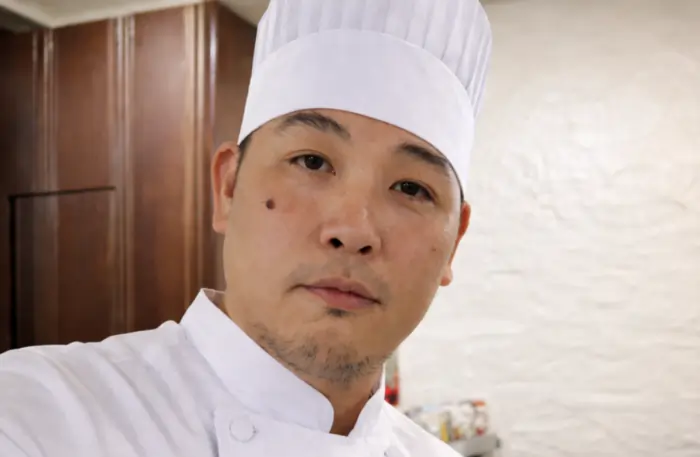
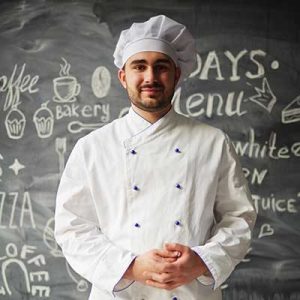
Chef Juan Gadi brings the heart of Filipino hospitality to Ubud, Bali. As an Executive Chef and consultant, he specializes in creating intimate, curated dining experiences that tell a story through every dish. Whether leading the kitchen at Kilig Filipino Warung or hosting a private villa dinner, Chef Juan’s approach is defined by warmth, modern technique, and a commitment to culinary excellence.