Role of Respect and Generosity in Filipino Food Culture Key Takeaways
In the Philippines, every meal is a silent promise of care, a gesture of inclusion, and a living lesson in respect.
- The role of respect and generosity in Filipino food culture is visible in the way elders are always served first and the best portions are set aside for guests.
- Generosity and hospitality are not optional virtues in Filipino food culture —they are foundational expectations that define the Filipino identity.
- Shared meals , communal dining , and the bayanihan spirit of food sharing turn every gathering into a celebration of belonging and gratitude.
What the Role of Respect and Generosity in Filipino Food Culture Means Today
Imagine walking into a home in Manila, Cebu, or even a Filipino kitchen in Bali: the moment you step through the door, the question “Kumain ka na ba?” (Have you eaten?) is asked before any other greeting. This is not small talk—it is a deep expression of Filipino values that places food at the center of every relationship. The role of respect and generosity in Filipino food culture teaches that a person who eats alone is a person who carries a burden alone. So, we pull up a chair, share what we have, and, in doing so, share our lives.
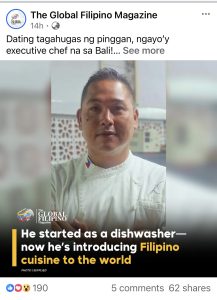
For me, Chef Juan Gadi, this philosophy is the heartbeat behind every dish I create. Whether I am crafting a modern version of traditional Filipino food in Ubud or hosting a private dinner under the Balinese sky, I carry the lesson my grandmother taught me: a meal is never truly yours—it belongs to everyone who joins you. This article explores seven ways that respect for elders, generosity, and Filipino hospitality define the country’s culinary traditions and explain why communal dining remains the most profound expression of cultural identity.
Why Is Generosity Important in Filipino Food Culture?
Generosity is the engine that drives Filipino food culture. A Filipino host would rather send a guest home with leftovers than let a single plate return empty. This practice, known locally as “pabalot,” is not about abundance in the pantry—it is about abundance in the heart. The role of respect and generosity in Filipino food culture dictates that offering food is offering love, and any hesitation to accept is gently overruled with a warm “Sige lang, marami pa.”
Generosity as a Foundation of Filipino Dining Customs
From family gatherings to festive Filipino celebrations, the table is always set for more people than are present. This is because hospitality traditions demand that a guest is never unexpected. My own family would prepare a mountain of rice and an extra serving of adobo “just in case.” That extra serving often went to a neighbor, a tricycle driver, or a distant cousin who happened to pass by. This is generosity unplanned and unconditional. It reflects a cultural heritage where abundance is measured not by what you keep, but by what you give away.
How Food Reflects Filipino Cultural Values
Every dish tells a story of family values. The slow-cooked tenderness of Filipino cuisine—think kare-kare with its rich peanut sauce, or sinigang with its restorative sourness—mirrors the patience and care required to nurture relationships. The act of sharing food from a common platter, known as “salu-salo,” reinforces equality and belonging. No one eats better than anyone else at a shared meals table; everyone digs into the same dish, and everyone is equally welcome. That is why food and culture are inseparable in the Philippines. For a related guide, see Why Filipino Cuisine Fits Balis Relaxed Dining Culture.
How Does Filipino Hospitality Influence Dining Traditions?
Filipino hospitality is legendary, and it shows in the way meals are prepared, served, and received. A guest in a Filipino home is treated like royalty—not because the host wants to show off, but because the host honors the relationship. The role of respect and generosity in Filipino food culture transforms a simple dinner into a carefully orchestrated ritual of care: the best chair, the freshest utensils, the most tender piece of meat—all go to the visitor first.
Hospitality and Welcoming Guests Through Food
Opening your home to someone means opening your kitchen without reservation. In my experience consulting for private dining events in Bali, I see the same instinct in Filipino lifestyle abroad: a freshly cooked meal is the first act of welcome. Studies from the Philippine Department of Tourism highlight that food tourism in the Philippines thrives because of this ingrained warmth—every meal is an invitation into a lived culture.
Common Hospitality Traditions in Filipino Households
When a guest arrives, the first thing offered is always something to drink or eat, even if the visit is brief. Coffee, merienda snacks, or a full meal are prepared without hesitation. This hospitality culture extends to fiestas, where a whole lechon is roasted, tables overflow with traditional Filipino food, and neighbors who have never met are urged to “Kain tayo!” (Let’s eat!). The message is clear: you are safe, you are valued, and you belong.
What Role Does Respect Play During Filipino Family Meals?
Respect for elders is the cornerstone of Filipino values, and no setting practices this more visibly than the dining table. The role of respect and generosity in Filipino food culture requires children to pause, wait for elders to take their seats, and say “po” and “opo” when serving them. This is not a rigid formality; it is a daily lesson in gratitude and hierarchy.
Respect for Elders During Family Gatherings
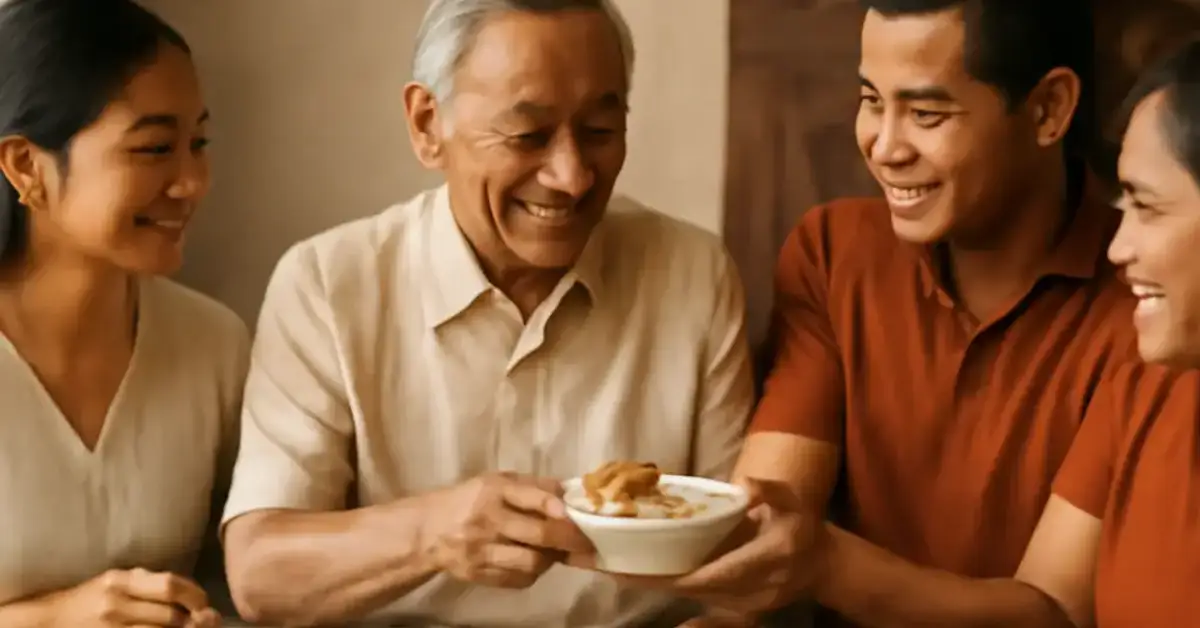
During family gatherings, the eldest members are served first. The best portion of fish, the first scoop of rice, the choicest piece of lechon—these are reserved for grandparents, aunts, and uncles. Younger family members learn to pass dishes with both hands and wait until the elder takes the first bite. This dining etiquette reinforces that age is honored, and wisdom is respected. The simple act of serving food becomes a teaching moment about cultural identity.
How Are Respect and Gratitude Expressed Through Filipino Cuisine?
Respect also appears in the way meals are presented. A properly prepared Filipino cuisine dish is offered with a smile and a gentle bow of the head—a gesture of humility. Gratitude is expressed both before and after eating: a silent prayer of thanks, followed by a sincere “Salamat po sa pagkain” (Thank you for the food). In my kitchen, I always encourage my team to taste every dish with that same sense of gratitude. Because when you respect the ingredient, you respect the person who will eat it.
Why Do Filipinos Often Share Food with Guests?
The answer lies in the concept of bayanihan spirit—the tradition of communal unity and mutual help. Historically, when a family moved their house (literally carried by the community), everyone contributed food. Today, that same spirit lives on in food sharing. The role of respect and generosity in Filipino food culture means that no one should leave a table without having eaten their fill.
Cultural Significance of Offering Food to Visitors
Offering food is a gesture that says, “I see you, and I care for you.” It is considered rude to let a visitor leave without partaking in something—even a glass of water. In the Filipino lifestyle, this practice builds trust and social harmony. A study published in the Journal of Food and Culture (reference available through Taylor and Francis) notes that communal dining cultures score higher on social cohesion metrics. The Philippines is a living example of that research.
Bayanihan Spirit in Food Sharing
This is especially visible during fiestas, town celebrations, and Filipino celebrations like Christmas and New Year. Entire neighborhoods contribute dishes to a long communal table. The act of food sharing breaks social barriers—rich and poor, young and old, family and stranger eat side by side. The bayanihan spirit ensures that everyone is fed, and through that act, everyone is lifted.
Why Is Communal Dining Important in Filipino Culture?
Communal dining is not a trend in the Philippines; it is the default. The practice of gathering around a table, often with more people than chairs, is the most direct expression of the role of respect and generosity in Filipino food culture. Every meal becomes a reaffirmation of community bonding and social connection.
Communal Eating and Social Connection
When people eat together, conversations flow, laughter erupts, and stories are passed down. Filipino food culture uses meals as the context for solving problems, planning futures, and healing old wounds. The “kwentuhan” (storytelling) that happens over a shared platter of pancit is as nourishing as the noodles themselves. In my restaurants, I design long tables and shared platters to encourage this connection—because a meal eaten alone loses its soul.
Family-Centered Food Traditions
Sunday lunches, birthday celebrations, and even simple weekday dinners rotate around the idea of shared meals. Grandmother’s recipe for lumpia or chicken relleno is not just a recipe; it is a family heirloom. Preserving family-centered food traditions through gatherings ensures that cultural heritage is passed, not stored in a book but tasted, smelled, and remembered. That is why intergenerational transmission of cultural values happens most effectively over the dining table.
How Do Family Gatherings Strengthen Food Traditions?
Family gatherings are the guardians of culinary traditions. Every reunion is an opportunity to recreate dishes that ancestors cooked. The role of respect and generosity in Filipino food culture is felt when the eldest aunt demonstrates the proper way to wrap a suman in banana leaves, or when a younger cousin learns the exact balance of vinegar and soy for a perfect adobo.
Preserving Traditions Through Family Recipes
Passing down recipes is a sacred act in the Filipino lifestyle. These recipes are almost never written down precisely—they are learned by watching, tasting, and sensing. As a chef, I consider it my duty to preserve these methods while applying modern technique. When I prepare a family-style dinner in Bali, I often use my grandmother’s ratio for bibingka or my mother’s method for kare-kare. That continuity is the heart of cultural identity.
Importance of Inclusivity at the Dining Table
No one is ever excluded from a Filipino meal. Inclusivity at the dining table is non-negotiable. Extra chairs are always pulled in, and children are taught to squeeze together to make space. This teaches the next generation that social harmony and community bonding begin with the simple act of making room. Every time I set a table for a private villa dinner, I ensure that the seating arrangement allows for that same level of closeness—because that is where magic happens.
What Is the Connection Between Bayanihan and Food Sharing?
Bayanihan literally means “being in a community.” The connection to food is natural: you cannot help a neighbor if you do not feed them. Historically, food sharing during bayanihan spirit projects was the nourishment that made hard labor possible. Today, that translates into disaster relief efforts, community fundraisers, and even potluck gatherings in overseas Filipino communities. The role of respect and generosity in Filipino food culture turns food into a tool for community resilience and collective survival.
Strengthening Relationships Through Hospitality
Every time a Filipino family shares food, they strengthen a relationship. The act of cooking for someone says, “I invested time and effort for you.” The act of accepting that food says, “I trust you.” This reciprocity builds strong social fabric. In my experience as a consultant, I have seen how hospitality traditions can transform a simple dinner into a deep, lasting bond—across cultures, across kitchens, across islands.
Useful Resources
For a deeper dive into the cultural anthropology of Filipino dining, I recommend reading the work of Doreen Fernandez, a pioneering scholar on Filipino food culture. Explore her essays through the Anvil Publishing catalog. For practical inspiration on bringing communal dining into your own kitchen, visit Filipino Food Lover, a community-driven resource for recipes and traditions.
Frequently Asked Questions About Role of Respect and Generosity in Filipino Food Culture
Why is generosity important in Filipino food culture ?
Generosity is the defining virtue of Filipino food culture. It transforms every meal into an act of care, ensures guests are always fed, and strengthens community ties. In Filipino homes, the best food is always reserved for visitors, and hosts feel genuinely insulted if a guest leaves hungry.
How does Filipino hospitality influence dining traditions?
Filipino hospitality dictates that guests are treated like family. This influences everything from menu planning—overcooking to ensure abundance—to seating arrangements where the best spot is offered to the visitor. Traditions like “pabalot” (wrapping leftovers for guests) stem directly from this deep-seated warmth.
What role does respect play during Filipino family meals?
Respect for elders is shown through specific dining etiquette: elders are served first, children wait for the eldest to begin eating, and dishes are passed with both hands. This ritual teaches younger generations humility, patience, and reverence for family hierarchy.
Why do Filipinos often share food with guests?
Sharing food is the most direct expression of Filipino values like generosity and community. It signals that the guest is trusted, valued, and welcomed into the family circle. In Filipino food culture, not offering food to a guest is considered inhospitable and disrespectful.
How does food reflect Filipino cultural values?
Every aspect of Filipino cuisine reflects Filipino values: the communal nature of dishes like bulalo or sinigang mirrors family-centered food traditions. The patience required to prepare slow-cooked flavors reflects the cultural emphasis on care and effort in relationships.
What are common hospitality traditions in Filipino households?
Common traditions include immediately offering a beverage or snack upon a guest’s arrival, preparing extra food “just in case,” serving the best portions to visitors, and sending them home with leftovers. These customs are pillars of the welcoming culture in Filipino households.
How do family gatherings strengthen food traditions ?
Family gatherings are the primary vehicle for transmitting culinary traditions. Recipes are passed orally and practically during reunions, ensuring that traditional Filipino food is preserved. These events also reinforce the role of respect and generosity in Filipino food culture.
What is the connection between bayanihan and food sharing ?
Bayanihan spirit is the Filipino tradition of communal unity. During community projects, celebrations, or emergencies, food sharing becomes the fuel and symbol of collective effort. It transforms cooking from a household chore into a community bonding act.
How are respect and gratitude expressed through Filipino cuisine ?
Respect is shown through careful preparation, serving elders first, and using polite language during meals. Gratitude is expressed with a prayer before eating, a sincere “salamat” after, and by cleaning one’s plate—a sign of appreciation for the cook’s effort.
Why is communal dining important in Filipino culture?
Communal dining fosters social harmony and community bonding. It ensures that no one eats alone, encourages food sharing, and creates a space for storytelling and relationship-building. It is the ultimate practice of Filipino hospitality.
What is the cultural significance of offering food to visitors?
Offering food is a non-verbal declaration of safety, trust, and welcome. In Filipino food culture, it signals that the visitor is not a stranger but an extension of the family. This tradition strengthens community resilience and social bonds.
How do Filipino celebrations use food to express generosity ?
Filipino celebrations like fiestas, Christmas, and birthdays are built around abundant food sharing. Tables overflow with dishes, and guests are encouraged to eat, take more, and take some home. The abundance is a celebration of generosity itself.
What is the dining etiquette for respecting elders in Filipino meals?
Children must wait for elders to be seated and to begin eating. Dishes and utensils are passed with two hands. The “mano” gesture (pressing an elder’s hand to one’s forehead) is often performed before or after the meal as a sign of respect for elders.
How do overseas Filipinos maintain food traditions abroad?
Overseas Filipinos recreate Filipino food culture by organizing potlucks, sourcing traditional Filipino food ingredients through specialty stores, and teaching the next generation family recipes during reunions. These practices preserve cultural identity far from home. For a related guide, see 10 Filipino Family Food Traditions Seen in Bali.
Why is inclusivity important at the dining table in Filipino culture?
Inclusivity reinforces the Filipino values of community bonding and equality. Making room for everyone—regardless of relationship status, wealth, or background—demonstrates that the table is a place of belonging, not exclusion.
How does food symbolize care and belonging in Filipino families?
A home-cooked meal is the most direct language of love. Preparing someone’s favorite dish, adjusting spice levels for a picky eater, or cooking a sick family member’s comfort food all speak to food as a symbol of care and belonging.
What are the intergenerational values passed through Filipino cooking?
Cooking together passes family values such as patience, generosity, and respect. The act of measuring ingredients “by feel” and listening to stories while preparing traditional Filipino food embeds cultural heritage in the next generation.
How do Filipino food traditions promote social harmony?
By encouraging shared meals and inclusive seating, Filipino food traditions break down social barriers. Eating from the same dish creates intimacy, and the act of food sharing builds trust and mutual respect across generations and social groups.
What is the role of food in Philippine fiestas?
Food is the centerpiece of Filipino celebrations. Fiestas feature elaborate spreads where every family contributes a dish. This food sharing honors the community’s patron saint and reinforces community bonding through abundance and generosity.
How can I experience authentic Filipino hospitality through food?
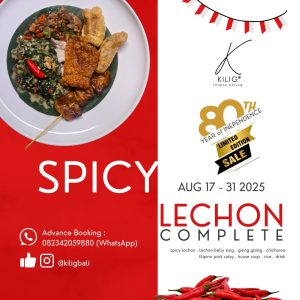
The best way is to accept an invitation to a Filipino home and arrive hungry. Alternatively, visit a restaurant that practices communal dining traditions. In Ubud, Bali, Kilig Filipino Warung (led by Chef Juan Gadi) offers intimate meals that honor traditional Filipino food and the warmth of Filipino hospitality. For a related guide, see 8 Ways Filipino Cuisine Connects Cultures in Bali.
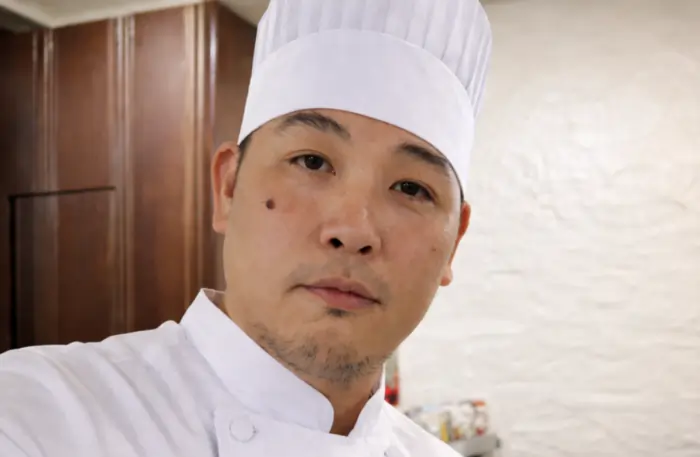
Chef Juan Gadi brings the heart of Filipino hospitality to Ubud, Bali. As an Executive Chef and consultant, he specializes in creating intimate, curated dining experiences that tell a story through every dish. Whether leading the kitchen at Kilig Filipino Warung or hosting a private villa dinner, Chef Juan’s approach is defined by warmth, modern technique, and a commitment to culinary excellence.