Guide to Filipino Dining Etiquette for First Time Visitors Key Takeaways
Understanding Filipino dining etiquette transforms a simple meal into a meaningful cultural exchange.
- The guide to Filipino dining etiquette for first time visitors emphasizes respect for elders, communal sharing, and gratitude.
- Family style eating Philippines is the norm—dishes are placed in the center and everyone serves themselves.
- Saying “thank you” and offering help with clean-up are valued gestures that deepen cross-cultural bonds.
Understanding Philippine Dining Culture and Hospitality Traditions
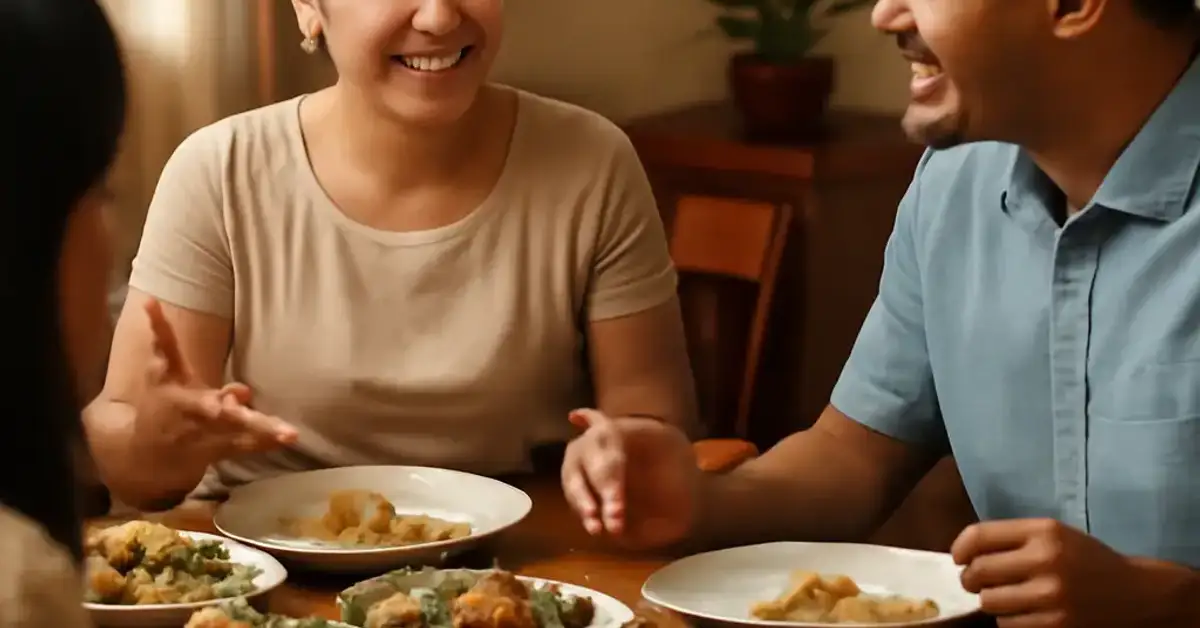
Filipino meals are rarely just about food. They are social events where relationships are strengthened, stories are shared, and generosity is expressed through abundant servings. For first-time visitors, knowing a few key customs can make the experience welcoming and respectful. For a related guide, see Filipino Food Traditions: 7 Essential Customs Every Traveler Must Know.
In Philippine dining culture, the host typically invites guests to start eating, often with the phrase “Kain na!” which means “Let’s eat!”. Wait for the host or the eldest person at the table to begin before reaching for food. This simple act shows respect in Filipino meals and acknowledges the social hierarchy that Filipinos value. For a related guide, see Why Filipino Cuisine Fits Balis Relaxed Dining Culture.
Filipino hospitality traditions go beyond the table. Expect to be offered food or drinks even if you say you are not hungry. Refusing outright can be seen as rejecting the host’s generosity. A polite “Salamat po, busog na ako” (Thank you, I am full) works better than a simple “no.” For a related guide, see Filipino Food Traditions: 7 Essential Customs Every Traveler Must Know.
What First-Time Visitors Should Expect at a Filipino Table
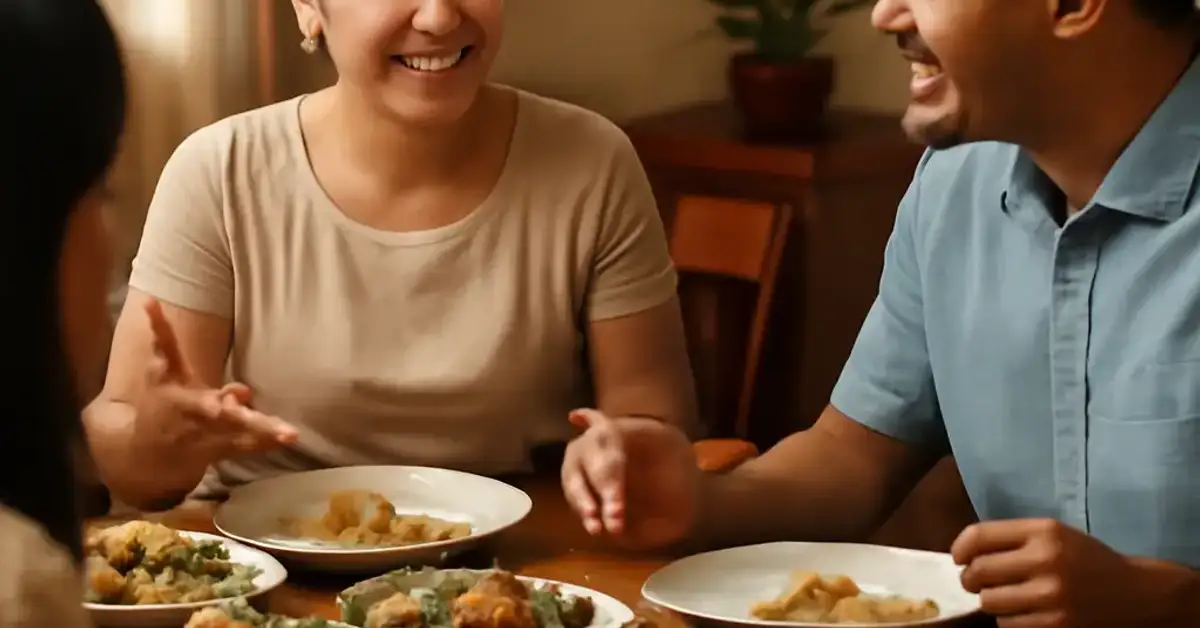
Most Filipino homes and many restaurants serve meals family style eating Philippines. Rice is present at nearly every meal—even breakfast. Dishes such as adobo, sinigang, and lechon are placed in the center of the table, and each person takes a portion onto their own plate.
Utensils are typically a fork and spoon. The spoon is held in the right hand and used for eating, while the fork in the left hand helps push food onto the spoon. Knives are less common because dishes are usually cut into bite-sized pieces before serving.
Traditional Filipino dining customs also include using your hands—called kamayan—especially during festive occasions like a boodle fight where food is laid out on banana leaves and eaten without utensils. If invited to a kamayan meal, follow the host’s lead: wash your hands first, eat with your right hand only, and avoid touching communal dishes with your fingers.
Key Filipino Table Manners Every Traveler Should Know
Proper Filipino table manners revolve around consideration for others. Here are the most important ones to remember:
- Wait to be seated – The host will usually indicate where you should sit. Elders and guests of honor are seated first.
- Do not start eating before the host or eldest person – Even if the food is already on the table, wait for the cue.
- Use serving spoons – Never use your personal utensils to take food from shared platters.
- Keep your mouth closed while chewing – This is considered polite across most cultures, and the Philippines is no exception.
- Say “salamat po” (thank you) after the meal – Expressing gratitude is a hallmark of Filipino food sharing culture.
These social dining norms Philippines reflect the deeper value of pakikisama (getting along with others) and hiya (sense of shame or propriety). When you follow them, locals appreciate your effort and feel more at ease.
Restaurant Etiquette Philippines: From Casual Eateries to Fine Dining
In restaurants, many of the same Filipino restaurant manners apply. However, there are a few additional points:
- Tipping is appreciated but not mandatory. A 10% tip is standard for good service. Some upscale restaurants include a service charge.
- If you are invited by a local, they may insist on paying the entire bill. Offer to split once, but if they decline, accept gracefully. You can reciprocate by treating them next time.
- In casual eateries called carinderias, you line up, point to the dishes you want, and pay at the counter. There is no strict seating order.
- In fine dining, follow Western-style etiquette: napkin on your lap, elbows off the table, and wait for everyone to be served before eating.
Cultural Sensitivity Dining Philippines: What to Avoid
Practicing cultural sensitivity dining Philippines means being mindful of actions that may unintentionally offend. Here are common pitfalls to avoid:
- Pointing your feet – In Filipino culture, feet are considered the lowest part of the body. Never point your feet at someone or at the dining table.
- Refusing food too many times – As mentioned, declining once or twice is fine, but persistent refusal can make the host feel you dislike their food or company.
- Eating with your left hand – Especially during kamayan meals. The left hand is traditionally used for hygiene purposes, so eating with it is considered unhygienic and disrespectful.
- Leaving the table without excusing yourself – If you need to leave during the meal, say “Paumanhin po, lalabas lang saglit” (Excuse me, I will step out for a moment).
These cultural food etiquette Southeast Asia norms are shared widely across the region but have local nuances. Learning them shows genuine interest and respect for Filipino cultural values food.
Southeast Asian Dining Etiquette: How the Philippines Compares
While Southeast Asian dining etiquette varies from country to country, the Philippines shares some similarities with neighbors like Indonesia and Malaysia—especially the emphasis on communal eating and respect for elders. However, there are distinct differences:
| Aspect | Philippines | Thailand | Vietnam |
|---|---|---|---|
| Utensils | Fork and spoon (spoon is primary) | Fork and spoon (fork pushes food) | Chopsticks and spoon |
| Rice placement | On the same plate as main dishes | On a separate plate | In a bowl |
| Kamayan (hand eating) | Common during feasts | Less common | Rarely practiced |
| Toasting | “Tara!” or “Cheers!”—eye contact is okay | “Chok dee!”—lower glass for elders | “Dzo!”—hold glass with both hands |
Understanding these differences helps travelers adjust their behavior as they move across countries, and it reinforces why a dedicated dining etiquette travel guide for the Philippines is valuable.
Practical Etiquette for Travelers Philippines: Before, During, and After the Meal
Here is a simple timeline to follow for any Filipino dining invitation:
Before the Meal
- Arrive on time. Filipinos are generally punctual for formal invitations, though casual gatherings may have a flexible start.
- Bring a small gift—dessert, drinks, or fruit—if you are visiting someone’s home. It is a gesture of appreciation.
- Wait to be invited inside. Many Filipino homes have a practice of removing shoes at the door.
During the Meal
- Observe communal eating practices Philippines: take only what you can finish, and do not hoard food on your plate.
- Compliment the food. Saying “Ang sarap!” (It’s delicious!) delights the host and reinforces hospitality driven dining culture.
- If you are offered seconds, it is polite to accept at least a small portion.
After the Meal
- Offer to help clear the table or wash dishes. The host will likely refuse, but the offer itself is appreciated.
- Thank the host personally before leaving. A handwritten thank-you note is a beautiful touch, especially in more formal settings.
- If you are a guest in someone’s home, do not rush to leave immediately after eating. Stay for conversation—it is part of Filipino meal traditions.
Filipino Dining Experience Guide: Embracing the Spirit of Sharing
At its core, the Filipino dining experience guide is not a rigid rulebook but an invitation to connect. When you sit at a Filipino table, you are accepted into a community. The act of sharing food—whether it is a simple breakfast of garlic fried rice and dried fish or a festive lechon feast—reflects the Filipino value of bayanihan (communal unity).
For cultural dining experiences Asia, the Philippines offers one of the warmest welcomes. Let curiosity guide you, and do not be afraid to make small mistakes. Locals will appreciate your effort far more than perfect form. Remember, the goal is connection, not perfection.
Useful Resources
For more on Filipino food culture and travel etiquette, check out these reliable sources:
- Britannica: Filipino Cuisine – A comprehensive overview of Filipino food history and regional variations.
- Lonely Planet: Eating in the Philippines – Practical tips for travelers, including street food and dining customs.
Frequently Asked Questions About Guide to Filipino Dining Etiquette for First Time Visitors
Do I need to bring a gift when invited to a Filipino home for dinner?
Yes, it is polite to bring a small gift such as dessert, drinks, or fruit. It shows appreciation for the host.
Is it rude to refuse food in the Philippines?
Refusing food once or twice is okay, but persistent refusal can offend the host. It is better to accept a small portion.
Can I use my hands to eat in the Philippines?
Yes, during kamayan meals, eating with your right hand is traditional. Always wash your hands first.
What is the proper way to use fork and spoon in the Philippines?
Hold the spoon in your right hand and the fork in your left. Use the fork to push food onto the spoon.
Should I wait for everyone to be served before eating?
Yes, wait for the host or eldest person at the table to begin eating first.
Is tipping expected in Filipino restaurants?
Tipping is appreciated but not required. A 10% tip is standard for good service. Some restaurants add a service charge.
What should I do if I accidentally drop my utensils?
Apologize politely and ask for a replacement. It is not a major faux pas, but it is courteous to acknowledge.
Can I refuse an alcoholic drink during a Filipino meal?
Yes, you can politely decline. Saying you do not drink alcohol is perfectly acceptable.
What is a boodle fight?
A boodle fight is a military-style communal meal where food is spread on banana leaves and eaten with hands. It is a festive, social dining experience.
Is it okay to take a doggy bag home from a Filipino restaurant?
Yes, taking leftovers home is common and accepted. Ask for a “take-out” container.
How do I address older Filipinos during meals?
Use “Po” and “Opo” when speaking to elders. Address them as “Tito” (uncle) or “Tita” (aunt) as a sign of respect.
Should I remove my shoes before entering a Filipino home for a meal?
In many Filipino homes, yes. Look for a pile of shoes at the door as a cue.
What are common Filipino dishes I should try?
Adobo, sinigang, lechon, sisig, and kare-kare are must-tries. Rice accompanies every meal.
Is it acceptable to burp after a meal in the Philippines?
No, burping is considered impolite. Excuse yourself if it happens accidentally.
How do I compliment the food in Tagalog?
Say “Ang sarap!” (delicious) or “Masarap po ang luto ninyo” (Your cooking is delicious).
Can I take photos of the food in a Filipino restaurant?
Yes, but ask the host beforehand if it is a private gathering. In restaurants, it is generally fine.
What is the role of rice in Filipino meals?
Rice is a staple and is served with every meal. It is often used as a base to balance the strong flavors of dishes.
Should I help with clean-up after a meal?
Offering to help is appreciated even if the host declines. It shows gratitude and good manners.
Is it okay to ask for a spoon if none is provided?
Yes, it is perfectly fine to ask. Filipinos typically eat with a spoon, so they understand the request.
What should I do if I am a vegetarian dining in the Philippines?
Vegetarian options are limited but available. Inform your host in advance so they can prepare accordingly.
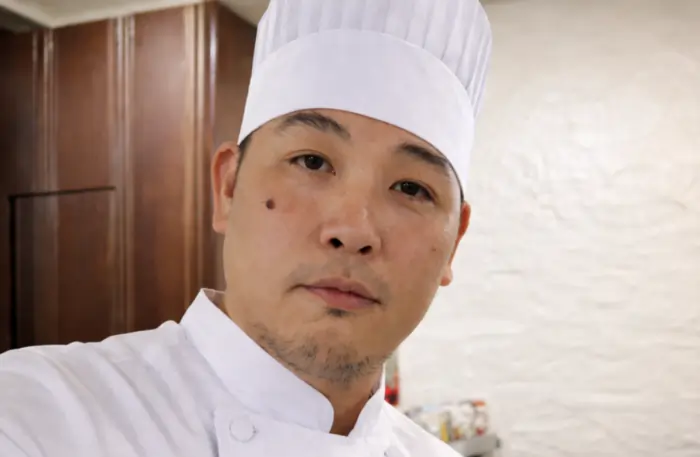
Chef Juan Gadi brings the heart of Filipino hospitality to Ubud, Bali. As an Executive Chef and consultant, he specializes in creating intimate, curated dining experiences that tell a story through every dish. Whether leading the kitchen at Kilig Filipino Warung or hosting a private villa dinner, Chef Juan’s approach is defined by warmth, modern technique, and a commitment to culinary excellence.