Filipino Food Reflects the Spirit of Island Living Key Takeaways
Filipino food reflects the spirit of island living through sun-kissed ingredients, age-old fishing traditions, and the warmth of shared meals.
- Filipino food reflects the spirit of island living by turning simple island harvests into bold, memory-making flavors.
- Dishes like kinilaw and grilled seafood capture the rhythm of the tides, while coconut and rice farming anchor daily meals.
- From fiestas to family-style dining , Filipino hospitality turns every meal into a celebration of community and the sea.
What Makes Filipino Food Reflect the Spirit of Island Living?
Walk through any local market in the Philippines and you immediately feel it: the pulse of the ocean, the scent of ripe tropical fruits, and the laughter of vendors selling that morning’s catch. Filipino food reflects the spirit of island living because it never forgets where it comes from—the shoreline, the hillside, the communal table. Every dish tells a story of survival, creativity, and profound respect for nature. For a related guide, see 10 Cultural Lessons Hidden in Traditional Filipino Meals.
Unlike landlocked cuisines that rely on heavy preservation, Filipino cooking thrives on what the day brings. The rhythm of coastal lifestyle means meals are built around fresh seafood, just-picked native herbs, and the ever-present coconut. There’s no strict barrier between the garden, the sea, and the plate. That fluid connection is the soul of Filipino cuisine.
How Geography Shapes Filipino Cuisine and Island Traditions
The Philippines is an archipelago of over 7,600 islands, and geography is the silent chef in every kitchen. Island communities develop distinct food identities because the ocean acts as both a highway and a pantry. In the Visayas, you’ll find kinilaw—raw fish cured in vinegar and sour fruit juices—while in Bicol, volcanic soil feeds taro leaves for laing. This mosaic of regional specialties forms a culinary map that Filipino food reflects the spirit of island living in the most authentic way.
Mountain terraces and rice farming landscapes tell another part of the story. The iconic Ifugao rice terraces aren’t just a postcard view; they’re a living pantry that supplies the grain central to every meal. Rice is the canvas upon which salty, sour, and savory island flavors are painted.
The Sea’s Gifts: Why Seafood and Tropical Ingredients Are Central
Ask a Filipino grandmother why fresh seafood matters, and she’ll likely smile and say, “The sea provides.” This deep trust fuels a coastal lifestyle where fishing traditions are passed down through generations. Kinilaw is the purest expression of this bond—no fire, just the sharp kiss of vinegar and the freshness of fish straight from the boat. Grilled seafood, eaten with bare hands on banana leaves, epitomizes the casual, open-air spirit of island life.
Tropical fruits add layers of brightness. Green mangoes, calamansi, and the creamy flesh of young coconut appear in drinks, desserts, and savory stews. Even sinigang, the beloved sour soup, often relies on tamarind or unripe guava—fruits that grow in backyards and along coastal trails. This reliance on indigenous ingredients turns every meal into a snapshot of the archipelago’s biodiversity.
The Tree of Life: Coconut, Rice, and Local Produce in Everyday Meals
The coconut palm is rightly called the “tree of life” in the Philippines. In Filipino cooking, every part is used: the water for refreshment, the meat for rich sauces, the milk as a base for countless traditional recipes. Laing wouldn’t exist without the creaminess of coconut milk simmered with dried taro leaves and native herbs. This minimalist brilliance—taking a few wild ingredients and transforming them into comfort—is how Filipino food reflects the spirit of island living.
Rice is more than a side; it’s the heartbeat of the table. Rice farming isn’t just agriculture—it’s a cultural ritual that shapes festivals, songs, and the timeless rhythm of island communities. Paired with mountain-grown vegetables or a simple fish sauce, a humble plate of steamed rice encapsulates the farm-to-table philosophy long before it became a global trend.
Fishing Traditions, Coastal Communities, and Sustainable Harvests
Small-scale fishing traditions still dominate the shorelines, with outrigger boats returning at dawn. This isn’t nostalgia; it’s a working reality that preserves sustainable fishing practices. Many island communities follow lunar cycles and traditional knowledge to avoid over-harvesting, ensuring that island harvests remain abundant for the next fiesta. Dining on grilled seafood wrapped in banana leaves is as much an environmental statement as a culinary one—waste is minimal, and respect is maximum.
The coastal lifestyle also dictates flavors. Dishes lean toward sourness (to cut through the heat) and saltiness (to replace what the sun takes). Even adobo, often called the national dish, originated as a preservation technique for meat and seafood in the tropical humidity—a clever island-born solution.
Fiestas and Family-Style Dining: Sharing Food in Island Culture
No conversation about Filipino food culture is complete without the word fiestas. Every town, no matter how remote, celebrates its patron saint with tables bending under the weight of family-style dining. Pancit—stir-fried noodles for a long life—is mandatory. Whole roasted pig, colorful desserts, and towering platters of grilled seafood turn a meal into a collective embrace. This is Filipino hospitality in its most edible form.
Sharing food isn’t just polite; it’s the social glue of island culture. Local markets and neighborhood eateries (carinderias) keep this spirit alive daily. Strangers become friends over a bowl of sour sinigang or a plate of adobo, because in the islands, eating alone is almost unthinkable.
7 Essential Dishes That Showcase Filipino Food Reflects the Spirit of Island Living
Ready to taste the islands? Here are seven absolute must-try plates that bottle the sun, sea, and soil of the Philippines.
1. Kinilaw
The original seashore starter. Cubes of the freshest fish (tuna or tanigue) are “cooked” in vinegar and calamansi, then tossed with ginger, chili, and coconut cream. It’s a pure, unadorned expression of fresh seafood and the fearless coastal lifestyle.
2. Grilled Seafood (Inihaw)
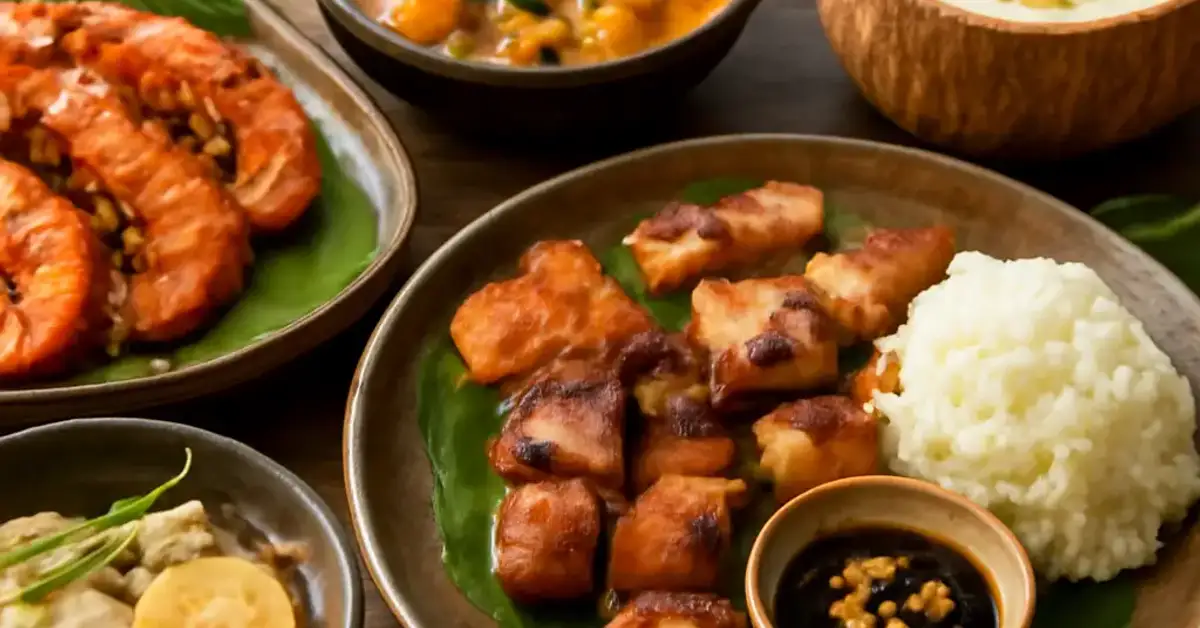
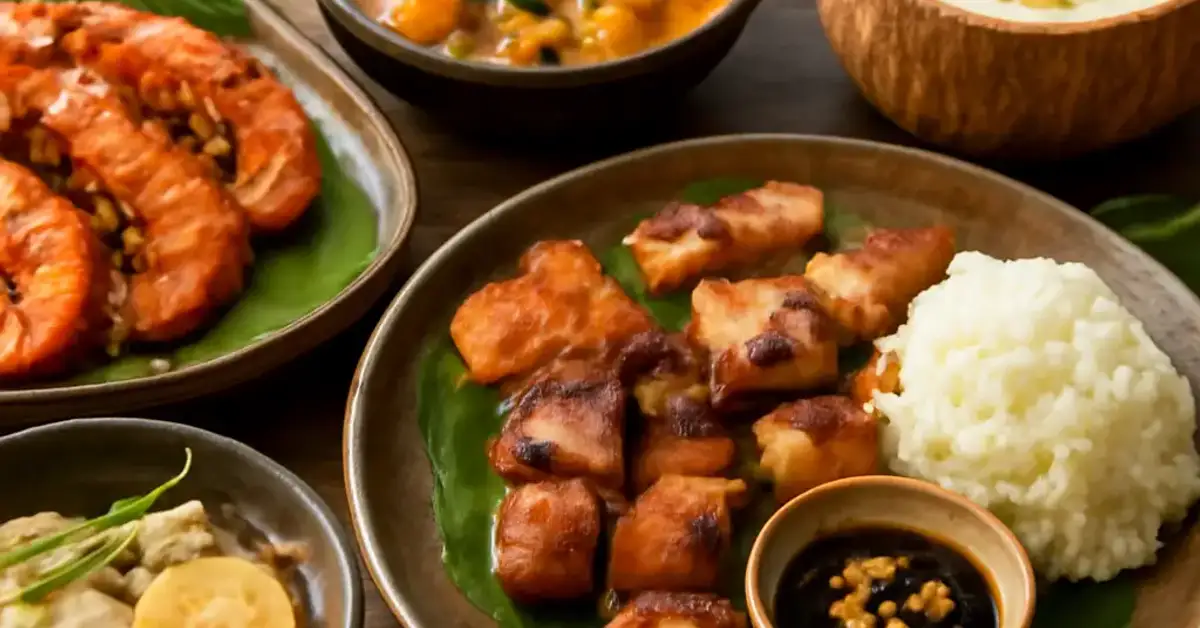
Whether it’s squid, whole lapu-lapu, or shell-on prawns, grilled seafood captures the essence of island harvests. Eaten with a dipping sauce of spiced vinegar and wrapped in banana leaves, it’s the quintessential beachside meal.
3. Adobo
Spain meets the islands in this soy-vinegar marvel, but adobo is uniquely Filipino. The same traditional recipes that preserved food on long sea voyages now deliver a savory-sour punch that defines heritage food.
4. Sinigang
This sour soup, often loaded with shrimp or fish, relies on tropical fruits like tamarind or green mango for its brightness. Sinigang is the comfort bowl that mirrors the warmth of island living.
5. Laing
From the Bicol region, laing simmers dried taro leaves in rich coconut milk with chili and native herbs. It’s a sublime example of how the simplest backyard ingredients become a creamy, spicy masterpiece.
6. Pancit
Every island has a version—pancit bihon, canton, or malabon. These noodle dishes symbolize long life and never miss a fiestas table. They weave together local ingredients like shrimp, coconut, and annatto oil.
7. Halo-Halo
Shaved ice, sweetened beans, purple yam, leche flan, and tropical fruits come together in a dessert that’s every bit as colorful as the Philippine seas. It’s the cool, joyful punctuation that Filipino food reflects the spirit of island living right through to the final spoonful.
Regional Specialties and a Farm-to-Table Island Harvest
Travel from north to south and your plate changes dramatically. Ilocos has its bagnet and pinakbet; Pampanga crafts the ultimate sisig; Mindanao’s pastil and pianggang showcase indigenous Malay-Muslim influences. These regional specialties prove that Filipino cuisine isn’t a monolith—it’s a collection of island communities each interpreting the same raw gifts differently. Farm-to-table here isn’t a restaurant buzzword; it’s the everyday act of visiting a local market and cooking what the island harvests offer that morning. The rise of indigenous ingredients on modern menus is simply a return to roots.
How Travelers Can Experience Authentic Island-Inspired Filipino Cuisine
For cultural travelers and food travel Philippines seekers, authenticity lies in the wet markets and coastal eateries. Companies like Philippines Department of Tourism Food Guide and community-led tours bring you face-to-face with fisherfolk and farmers. Join a sustainable fishing trip in Palawan or take a cooking class in a heritage home to learn traditional recipes. Every dish, from adobo to kinilaw, tastes richer when you’ve seen the net come in or the coconut cracked open in front of you. Filipino hospitality ensures you’ll never just eat—you’ll be welcomed into a story.
The Enduring Connection: Sea, Family, and Community in Every Bite
Filipino food reflects the spirit of island living because it remains stubbornly tied to the elements. The salt in the air, the generosity of the soil, and the reliance on community aren’t romantic concepts—they’re daily realities served on a plate. From the briny punch of kinilaw to the shared bowl of sinigang, Philippine cuisine captures the country’s close connection to the sea, nature, family, and community in the most honest way possible. To taste it is to understand that life on these islands moves with the tides, and every meal is a celebration of surviving and thriving together.
Useful Resources
For deeper dives into Filipino food travel and recipes, explore these trusted guides.
- Lonely Planet’s Food Lover’s Guide to the Philippines – an excellent primer on regional flavors and street eats.
- Kawaling Pinoy’s Authentic Adobo Recipe – a detailed step-by-step for mastering the island-born classic.
Frequently Asked Questions About Filipino Food Reflects the Spirit of Island Living
What makes Filipino food reflect the spirit of island living?
It’s the direct reliance on fresh seafood, tropical ingredients, and communal dining that mirrors the rhythm of coastal life and island communities.
How does the geography of the Philippines influence its cuisine?
The archipelago creates countless micro-climates and regional specialties, with each island group interpreting staple ingredients like rice, coconut, and fish in unique ways.
Why are seafood and tropical ingredients central to Filipino cooking?
Because over 7,000 islands mean access to abundant marine life, while the tropical climate yields year-round fruits and native herbs that define the flavor profile.
How do coastal communities shape traditional Filipino dishes?
Fishing traditions dictate meal times and preservation methods; dishes like kinilaw and grilled seafood evolved directly from what fishermen could prepare boat-side or on shore.
What role do coconut, rice, and local produce play in everyday meals?
Coconut provides milk, water, and oil; rice is the foundation of every meal; and local produce—from taro leaves to tropical fruits—adds layers of flavor and nutrition.
How do regional islands create unique Filipino food traditions?
Isolation and distinct cultural influences—Spanish, Chinese, Malay—give rise to dishes like Bicol’s laing, Visayan kinilaw, and Ilocano pinakbet, each a product of local geography.
What dishes best represent the Philippines’ island lifestyle?
Kinilaw, grilled seafood, adobo, sinigang, laing, pancit, and halo-halo capture the essence of fresh harvests, community sharing, and tropical creativity.
How can travelers experience authentic island-inspired Filipino cuisine ?
Visit local markets, join barangay food tours, take cooking classes with coastal families, and eat at carinderias where the menu changes with the day’s catch.
Why is sharing food an important part of island living in the Philippines?
Sharing reinforces bayanihan (community spirit) and Filipino hospitality; meals become a collective experience that strengthens family and neighbor ties.
How does Filipino cuisine capture the country’s close connection to the sea, nature, family, and community?
Every dish reflects the sea’s bounty, the land’s generosity, and the hands that prepared it together—from fishing to cooking to eating in a shared, open-air setting.
What is kinilaw and why is it so iconic?
Kinilaw is raw fish marinated in vinegar and citrus, often enriched with coconut cream. It embodies island purity—no fire, just the freshest catch and simple seasonings.
Is Filipino food always spicy?
Not universally; while Bicolano dishes like laing are famously spicy, many Filipino dishes balance sour, salty, and savory flavors with only a hint of heat, allowing ingredients to shine.
What are common native herbs used in Filipino dishes?
Lemongrass (tanglad), pandan, ginger, turmeric, and malunggay leaves are staples, adding fragrance and health benefits to soups, stews, and grilled items.
How important is rice farming to Filipino culture?
Profoundly so: rice is life (the Filipino word “mamuhay” roots in “buhay,” life). Ancient rice terraces and harvest celebrations prove its spiritual and economic centrality.
What is the difference between adobo and sinigang?
Adobo is a braised dish with soy sauce and vinegar, often with chicken or pork, while sinigang is a clear sour broth packed with vegetables and seafood or meat.
Are there vegetarian options in traditional Filipino food?
Yes; many dishes like laing, ginisang munggo (mung bean stew), and pinakbet (mixed vegetables) are naturally vegetable-forward, reflecting farm-to-table abundance.
What is the role of banana leaves in Filipino cooking?
Banana leaves are used as natural wrappers for grilling fish, steaming rice cakes, and plating food; they impart a subtle aroma and represent zero-waste island ingenuity.
How do fiestas influence Filipino food culture?
Fiestas showcase the best of a community’s culinary heritage—abundant family-style dining, special dishes like lechon and pancit, and the spirit of welcoming strangers.
What is Filipino hospitality like at meal times?
It’s famously generous; refusing food is almost impossible because hosts will insist you eat, often packing leftovers for you to take home—a true expression of caring.
Can I learn to cook Filipino dishes abroad?
Absolutely. Many online platforms and Filipino diaspora communities offer cooking classes, and key ingredients like coconut milk, fish sauce, and banana leaves are increasingly available worldwide. For a related guide, see 7 Signature Ingredients Behind Filipino Cuisine in Bali.
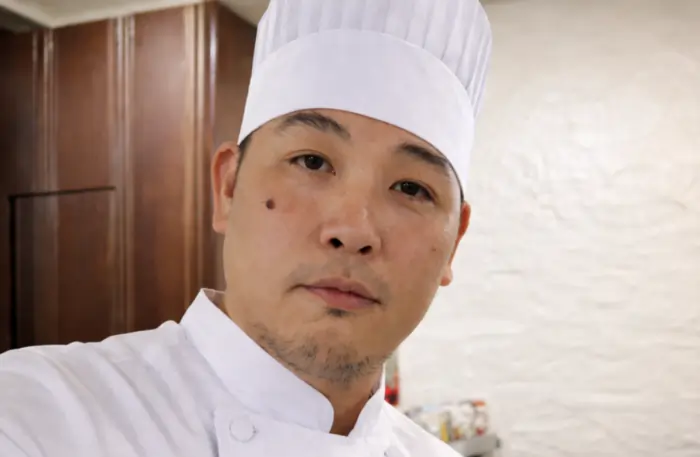
Chef Juan Gadi brings the heart of Filipino hospitality to Ubud, Bali. As an Executive Chef and consultant, he specializes in creating intimate, curated dining experiences that tell a story through every dish. Whether leading the kitchen at Kilig Filipino Warung or hosting a private villa dinner, Chef Juan’s approach is defined by warmth, modern technique, and a commitment to culinary excellence.