Filipino Dining Encourages Sharing Rather Than Individual Plates Key Takeaways
At its core, Filipino Dining Encourages Sharing Rather Than Individual Plates because food is a bridge to community, not just nourishment.
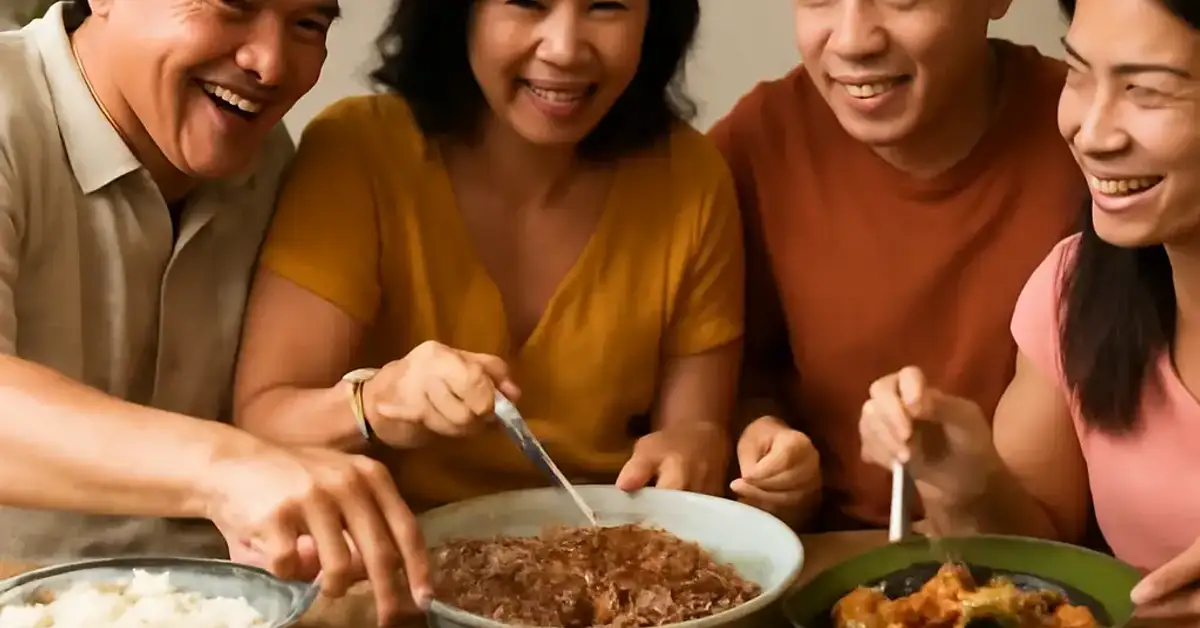
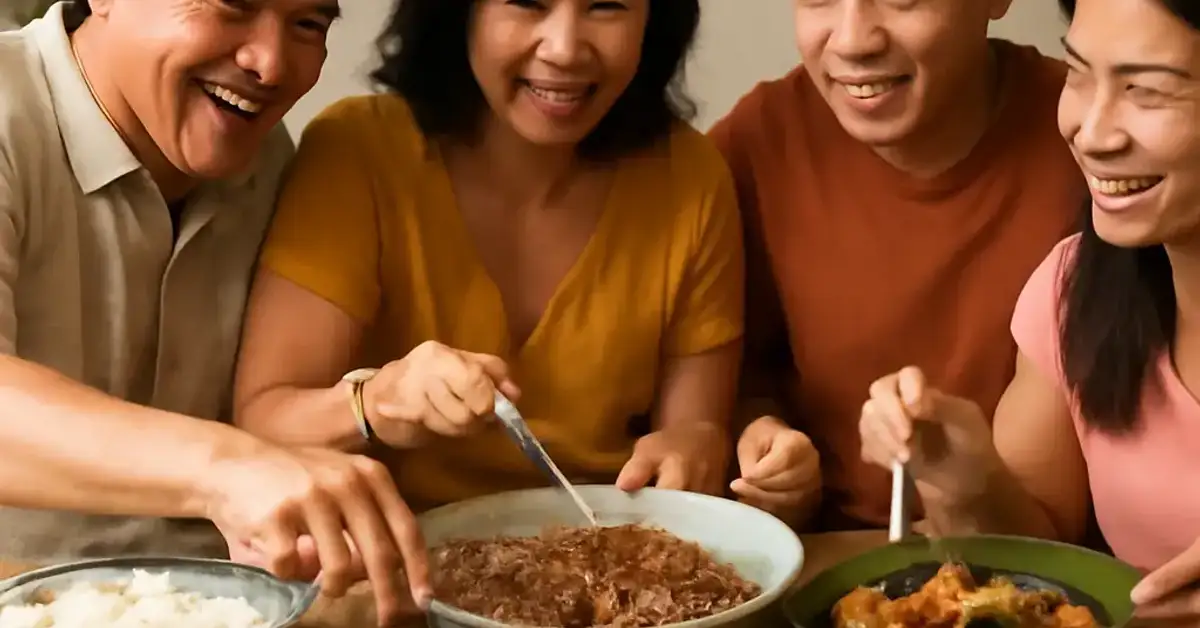
- Filipino Dining Encourages Sharing Rather Than Individual Plates through the time-honored practice of family-style dining , where dishes are placed at the center for everyone to enjoy together.
- Key dishes like adobo , sinigang , and lechon are designed to be served from communal serving platters , reflecting the Filipino value of "salu-salo" (feast).
- Shared tables symbolize Filipino hospitality and the belief that a meal is an expression of love, especially during fiesta traditions and everyday home cooking .
Why Filipino Dining Encourages Sharing Rather Than Individual Plates
In the Philippines, a solo plate is a quiet anomaly. The soul of Filipino dining culture whispers (or often shouts) that sustenance is only the beginning—connection is the destination. I’ve carried this truth from my grandmother’s kitchen in Manila to my own table at Kilig Filipino Warung in Ubud. The philosophy is simple: Filipino Dining Encourages Sharing Rather Than Individual Plates because we believe a meal is an unspoken invitation to break walls, not build them. For a related guide, see Why Filipino Cuisine Fits Balis Relaxed Dining Culture.
When you sit down to a Filipino spread, you’ll notice not a single plate guarded like a treasure, but a constellation of communal meals at the center. This practice, often called family-style dining, isn’t a recent trend—it’s an ancient inheritance from our island culture where resources were precious and community survival meant sharing everything, especially rice.
How Family-Style Dining Reflects Filipino Culture and Values
Every family-style dining arrangement is a mirror to the Filipino psyche. When I design a private villa dinner, I arrange the serving platters exactly as my lola (grandmother) did: adobo steaming next to a cascade of grilled seafood, with small bowls of calamansi and bagoong scattered like jewels. This placement isn’t random; it shouts equality and belonging. No guest is left to nibble in isolation—every hand passes the pancit, every spoon dips into the kare-kare.
The value of “pakikisama” (getting along) is etched into our dishes. Sharing a single bowl of sinigang means we trust the hands that dip into the sour broth. It’s a lesson I teach every culinary enthusiast who visits my kitchen: Filipino hospitality starts with offering the last piece of lechon to your companion, knowing the joy is in the giving. This is why Filipino Dining Encourages Sharing Rather Than Individual Plates as a loud, delicious declaration of our identity.
Why Rice, the Humble Grain, Anchors Every Shared Meal
No discussion of Filipino cuisine is complete without bowing to rice. It’s the unspoken promise that no one leaves the table hungry. As a chef, I’ve seen how a steaming pot of jasmine rice transforms a communal meal into a ritual. The grains are never pre-plated; instead, a large wooden trough or woven basket invites every hand to build a personal mound.
The logic is poignant: when calamities like typhoons sweep the archipelago, rice is the first communal gift. This same spirit floods into daily dining. The shared tables of our country echo the regional specialties of each province—whether it’s the coconut-rich Bicol Express or the pungent kinilaw of Cebu—all united by a bed of rice that demands to be shared, not portioned behind individual walls.
Iconic Dishes That Sing When Shared
Some traditional Filipino specialties are practically built for a crowd. A solo order of adobo tastes like a missed melody; it needs hungry companions to unlock its garlicky, vinegared symphony. I’ve curated countless celebration meals where the centerpiece lechon—a whole roasted pig with crackling skin—becomes a communal act of carving and storytelling.
The Majestic Lechon and the Unifying Power of Pancit
When a lechon arrives, conversations hush, then erupt in laughter as everyone reaches for the choicest parts. Similarly, a platter of pancit (noodles) is always mixed together by the eldest, symbolizing long life that we all must nurture. Even humble lumpia (spring rolls) lose their meaning when not passed from one hand to another, demonstrating that traditional recipes are social contracts, not solitary indulgences.
Dipping Sauces: The Personal Touch on a Communal Table
Beside every serving platter you’ll find a mosaic of dipping sauces. A tiny dish of calamansi soy, spicy vinegar, or fermented bagoong becomes your private territory on a shared table. It’s the brilliant paradox: we share everything, yet your sauce, your perfect mix, is uniquely yours. This delicate balance between unity and individuality is what makes Filipino Dining Encourages Sharing Rather Than Individual Plates so irresistibly human. For a related guide, see Why Filipino Cuisine Is Perfect for Group Dining.
From Everyday Kinilaw to Grand Fiesta: The Rhythm of Shared Dining
The cadence of Philippine cuisine changes with the calendar. On ordinary days, home cooking might center on a simple sinigang or a fresh catch of grilled seafood, but the plates remain communal. However, during fiesta traditions, the table bows under the weight of kakanin (rice cakes) in every hue and the towering halo-halo that must be stirred together at the table, laughter mixing with crushed ice.
I recall childhood summers when the entire barangay would stream into our home for the town fiesta. The celebration meals were never about efficiency; they were about abundance and story-swapping. The same energy I replicate in Ubud, laying out tropical fruits like sweet mangoes and rambutan freely, because Filipino hospitality demands that a guest’s hand is never empty. In these moments, the line between guest and family blurs across a landscape of shared tables.
Bringing Filipino Shared Dining to the World: A Chef’s Journey
As Chef Juan Gadi, I’ve had the privilege of hosting travelers from every corner who arrive with the Western habit of individual plating. My greatest joy is watching that initial hesitation dissolve when I place a platter of kare-kare in the middle and announce, “Walang aarte!”—no pretending. Through my private dining experiences in Bali, I teach that Filipino Dining Encourages Sharing Rather Than Individual Plates not as a rule, but as a passport to warmth. The island echoes of our regional specialties and the deep-rooted island culture prove that when plates collide, hearts follow.
Useful Resources
To explore more about Filipino culinary traditions and the philosophy of sharing, these sources offer rich insights:
- Filipino Food and Culture – Asian Studies Association
- The Surprising History of Filipino Food – BBC Travel
Frequently Asked Questions About Filipino Dining Encourages Sharing Rather Than Individual Plates
Why does Filipino dining encourage sharing instead of individual plates?
Sharing is a direct expression of the Filipino core value of community and kinship. A table full of communal dishes symbolizes that no one is left behind and aligns with the concept of “salu-salo,” where food is a medium for fostering relationships rather than a personal possession.
How does family-style dining reflect Filipino culture and values?
Family-style dining mirrors the collectivist nature of Philippine society. It reinforces “pakikisama” (togetherness) and “utang na loob” (debt of gratitude), as every shared bite becomes a gesture of care and mutual support that extends beyond the table into daily life.
Why are dishes served in the center of the table during Filipino meals?
Central serving signals that the meal belongs to everyone. This arrangement honors guests by giving them freedom to partake and encourages conversation, while breaking down hierarchies—everyone is equal as they reach into the same communal meals.
How does sharing food strengthen family and community relationships?
Shared meals create a ritual of connection. Passing plates, mixing dishes together, and the inevitable friendly arguments over the last piece of lechon build trust and intimacy, transforming eating into an active collaboration that binds family and community bonds tightly.
What role does rice play in shared Filipino dining?
Rice is the unifier—the constant that brings all flavors together. It’s the first thing placed on the table and the last to leave, acting as a blank canvas that every dish complements. Serving it communally guarantees that no one is left with an empty stomach, a non-negotiable part of Filipino hospitality.
Which traditional Filipino dishes are best enjoyed family style?
Almost every classic shines when shared. Adobo, sinigang, kare-kare, lechon, pancit, lumpia, and grilled seafood are all designed for communal eating. Their flavors intensify when everyone helps themselves, and the ritual of passing dipping sauces adds a personal layer.
What should first-time visitors know about Filipino dining etiquette?
Never take the last piece without offering it around first. Wait for the host to say “kain tayo” (let’s eat) before starting. It’s also common to use a spoon and fork, or sometimes kamayan (eating with hands)—all methods are rooted in the shared experience.
How do fiestas and celebrations influence communal eating traditions?
Fiesta traditions amplify the shared table to street-wide levels. Entire neighborhoods cook vast quantities of regional specialties and place them on long tables for everyone. This openness extends hospitality beyond the home, making every passerby a guest and cementing communal eating as a cultural spectacle.
How does shared dining differ between everyday meals and special occasions?
Daily home cooking may be simpler—a single dish like sinigang and fried fish—but it’s still family style. Special occasions, however, feature an abundance of kakanin, halo-halo, and a centerpiece lechon, with more intricate dipping sauces and greater emphasis on presentation and variety.
Why is sharing food considered an important expression of Filipino hospitality, generosity, and cultural identity?
Sharing food is the truest form of “malasakit” (compassion). Filipino hospitality is defined by treating guests like royalty, and a communal meal dismantles all barriers, proving that generosity is not about abundance but about the willingness to give from whatever you have.
What are serving platters in Filipino dining?
Serving platters are the large plates or banana-leaf-lined trays that hold central dishes. They are integral because they keep food accessible and encourage seconds; they also reduce the need for constant refilling, allowing hosts to sit and share the moment.
How does Filipino home cooking differ from restaurant presentations?
Home cooking leans heavier on family-style service, with dishes like kare-kare arriving in the same pot they were cooked in. Restaurants may plate individually but often still place a wooden board of grilled seafood or a communal bowl of soup at the center to honor tradition.
What are kakanin and why are they shared?
Kakanin are traditional rice-based delicacies such as bibingka, puto, and suman. They are always shared because they are made in batches for gatherings, and their sticky, sweet nature symbolizes unity and the hope that relationships stay as tightly bound as the glutinous rice.
What is the significance of dipping sauces in a shared meal?
While the main dishes are communal, dipping sauces provide personalization. Combining calamansi with soy sauce or mixing bagoong with chili lets each diner craft a unique flavor, balancing collective enjoyment with individual preference.
How do regional specialties influence shared dining?
Regional specialties bring provincial pride to the shared table. Bicol’s spicy laing, Pampanga’s sisig, or Iloilo’s batchoy each tell a distinct story, and sharing these dishes across regions fosters cultural exchange and broadens the collective Filipino palate.
What makes pancit a perfect dish for communal dining?
Pancit is the noodle dish most connected to long life and celebration. It’s always mixed by the eldest at the table and then shared, reinforcing hierarchy and continuity—every strand passed from one bowl to many plates signifies shared blessings.
Can grilled seafood be part of a family-style Filipino table?
Absolutely. Grilled seafood like inihaw na bangus, pusit, or giant prawns is a staple at beachside gatherings. Placed on banana leaves in the middle, diners peel and dip together, making the act of eating as interactive and communal as the preparation.
How do tropical fruits feature in shared Filipino desserts?
Tropical fruits like mango, pineapple, and rambutan are often presented whole on a large platter. This encourages guests to pick and slice together, turning the fruit course into a refreshing, informal conversation starter that extends the shared dining experience beyond the main meal.
What is the role of calamaansi in Filipino meals?
Calamansi is the tiny citrus that bridges flavors. Used in marinades and dipping sauces, its bright acidity cuts through rich dishes like lechon and lumpia, and a communal bowl of wedges ensures every diner can brighten their shared portion personally.
How can travelers respectfully join a Filipino shared meal?
Travelers should observe and follow the host’s lead: wait for the invitation to eat, use utensils or hands respectfully, accept seconds graciously, and always compliment the food. Embracing the chaos and closeness of communal meals is the best way to honor Filipino hospitality.
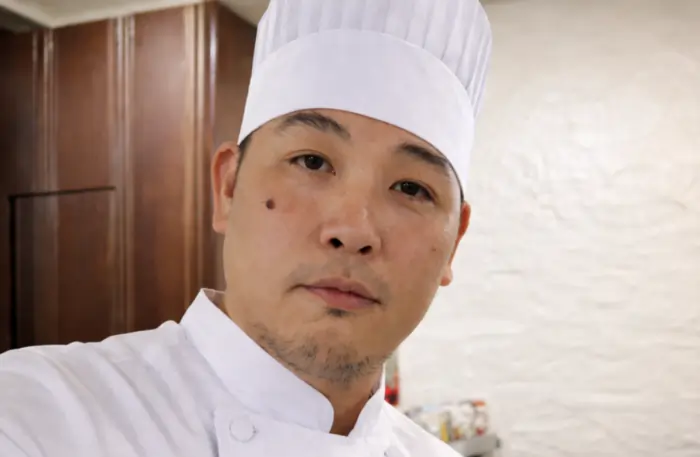
Chef Juan Gadi brings the heart of Filipino hospitality to Ubud, Bali. As an Executive Chef and consultant, he specializes in creating intimate, curated dining experiences that tell a story through every dish. Whether leading the kitchen at Kilig Filipino Warung or hosting a private villa dinner, Chef Juan’s approach is defined by warmth, modern technique, and a commitment to culinary excellence.